Electrical panel upgrades & service
If your lights flicker, breakers trip often, or your home needs more power, a panel upgrade may be part of the fix. VoltGuide helps you understand the job and compare licensed, insured, bonded electricians at no cost to you.
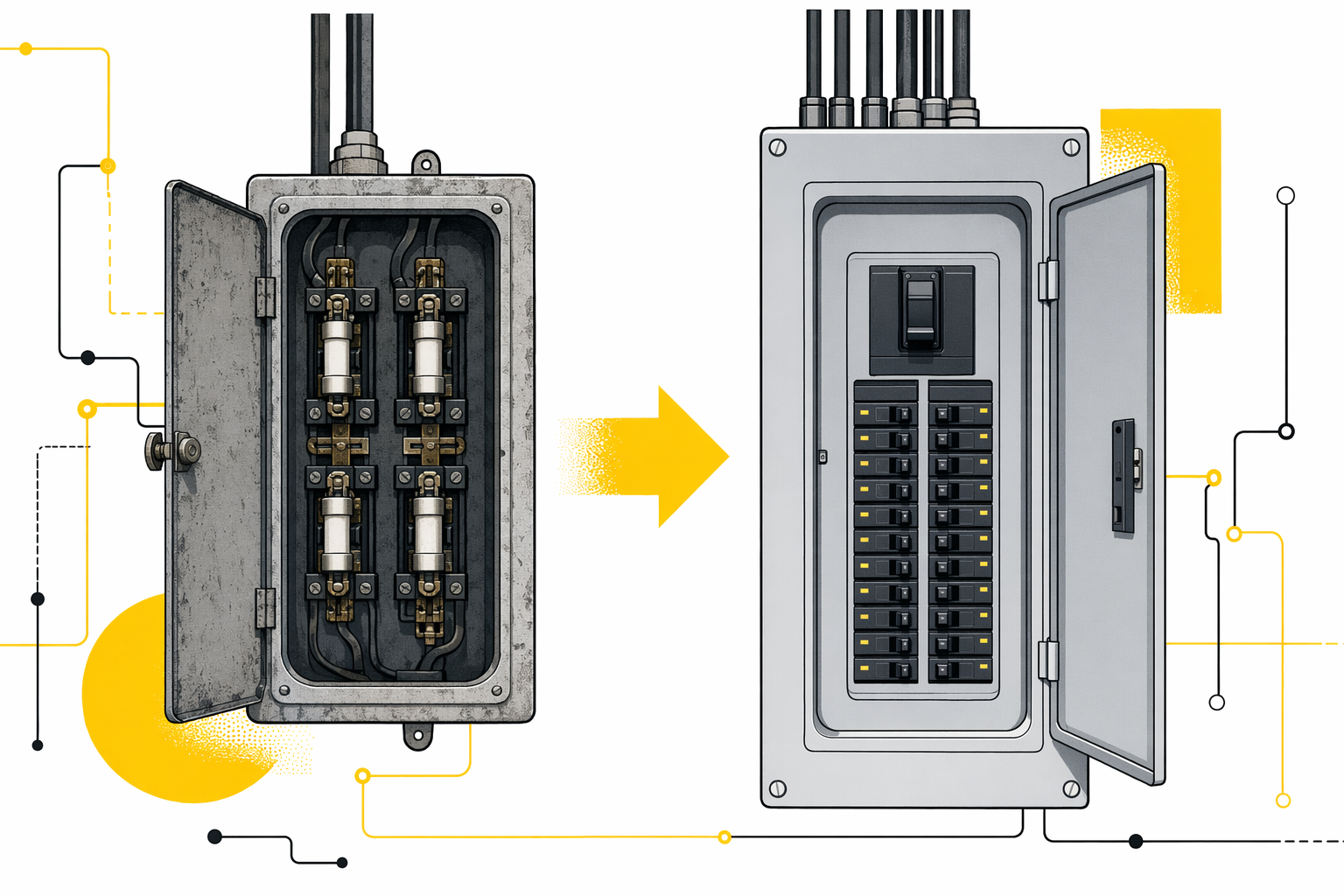
What a panel upgrade is — and when homeowners usually need one
Your electrical panel is the main distribution point for power in your home. A panel upgrade usually means replacing an older or undersized panel with a newer one that can safely handle more electrical load. Many homes also need related work, like a new main breaker, grounding updates, meter work, or service entrance changes.
Homeowners often look into a panel upgrade when:
- Breakers trip again and again
- The panel is full and there is no room for new circuits
- Lights dim when large appliances turn on
- You are adding central air, an induction range, a hot tub, or a Level 2 EV charger
- The home still has an old fuse box or outdated equipment
- You are planning a remodel, addition, or major appliance upgrade
A panel upgrade does not automatically fix every electrical problem. Sometimes the issue is a bad connection, overloaded branch circuit, old wiring, or a problem outside the panel. That is why it is smart to have a licensed, insured, and bonded electrician evaluate the full system before you agree to a big job.
How the job usually works
A panel upgrade is not a small handyman task. It is regulated work that usually needs permits, utility coordination, and inspection. Hire a licensed electrician and verify the license yourself before you sign anything.
A typical process looks like this:
- Site visit and load review. The electrician looks at the panel, service size, grounding, meter setup, and major appliances. They may do a load calculation to see whether 150A or 200A service makes sense.
- Written scope and price. Ask for the exact work in writing before any deposit. The scope should say what equipment will be replaced, whether permits are included, and whether utility or meter work is expected.
- Permit and scheduling. In many areas, the contractor pulls the permit and schedules shutdown or reconnect steps with the utility if needed. Read more about electrical permits.
- Power shutoff and replacement. On job day, power is usually shut off while the old equipment is removed and the new panel is installed.
- Inspection and closeout. The local authority may inspect the work before final signoff or utility reconnection, depending on local rules.
Some upgrades are straightforward. Others turn into bigger jobs if the electrician finds damaged wiring, missing grounding, code issues, water damage, or a service mast that also needs replacement.
Typical cost range for a panel upgrade
For many US homes, a panel upgrade to 200 amps typically runs about $1,800 to $4,500. That is a common estimate range, not a quote or guarantee. The real price depends on the panel, the wiring, the scope, the materials, permits, and the area.
Price often changes based on:
- Amperage and equipment. Upgrading from 100A to 200A usually costs more than a simple panel replacement with the same size.
- Panel location. A hard-to-access garage, basement, or exterior wall can add labor.
- Utility and meter work. If the meter socket, service mast, weather head, or service conductors need changes, cost can go up.
- Grounding and code updates. Older homes often need grounding, bonding, labeling, or AFCI/GFCI-related updates.
- Repairs found during the job. Damaged breakers, overheated bus bars, double-tapped circuits, or deteriorated wiring can add cost.
- Permits and inspection fees. These vary by city and county.
Electricians often charge $50-$130 per hour or use a flat rate for the full job. If someone gives you a very low number without looking at the home, be careful. A panel upgrade is one of those jobs where a cheap price can hide missing permit costs, incomplete scope, or corners that create trouble later.
If you want a broader sense of common electrical pricing before you compare bids, visit electrical costs.
How long it takes and what to expect on job day
Many panel upgrades take one day for the main replacement work, but planning, permits, utility scheduling, and inspection can stretch the full process to several days or a few weeks.
What homeowners should expect:
- Power will be off for part of the day. That means no lights, HVAC, internet, refrigeration cooling cycle, or charging during the outage window.
- Access matters. Clear the area around the panel before the crew arrives.
- Inspection may affect timing. Some jurisdictions require approval before full closeout or reconnection.
- Older homes can surprise you. If the electrician opens the system and finds unsafe conditions, the timeline may get longer.
Ask these practical questions before the work starts:
- How many hours will the power likely be off?
- Are permits included in the written price?
- Who handles utility coordination?
- What happens if hidden problems are found?
- Will the final paperwork show the new panel size and installed breakers?
A good electrician will answer these clearly, in plain language, and put the important details in writing.
Safety, code, and red flags
Electrical work is dangerous. Do not open the panel, remove the dead front, replace breakers, or try to upgrade service yourself. Hire a licensed electrician and follow local permit and code rules.
Call a licensed electrician now if you notice:
- A burning smell near the panel
- Smoke, sparking, or buzzing from the panel
- Hot panel cover or hot breakers
- Water getting into or around the panel
- Breakers that trip and will not reset
- Shock or tingling when touching appliances or metal parts
If there is smoke or fire, call 911.
A few red flags when shopping for bids:
- They suggest skipping the permit
- They say you do not need an inspection when local rules require one
- They want a large deposit before giving a written scope
- They cannot show an active license or proof of insurance and bond
- They push a full panel replacement without explaining why
For basic homeowner safety steps around electrical problems, see electrical safety basics. If you have an urgent issue, you can also review emergency electrical help.
Questions to ask before you hire
You do not need to know electrical code to ask smart questions. Use this list to protect yourself and make bids easier to compare:
- Are you licensed, insured, and bonded for this work in my area? Then verify the license yourself.
- What size service and panel are you recommending, and why? Ask what load calculation or reasoning supports it.
- What exactly is included? Panel, breakers, grounding, labeling, surge protection, meter socket, permit fees, patching, and cleanup should be clear.
- What is not included? This matters just as much as what is included.
- Will you pull the permit and arrange inspection? Get that answer in writing.
- How long will the power be off? Plan for food, work, internet, and medical devices if needed.
- What could change the final price? Hidden wiring damage and utility-required upgrades are common examples.
- What warranty applies to labor and installed equipment? Ask for the terms in writing.
Before you pay a deposit, make sure you have the price, scope, equipment, permit responsibility, and timeline in writing. You compare quotes. You choose who to hire. You hold the final payment until the agreed work is done.
How VoltGuide helps you compare electricians
VoltGuide is a free matching service for homeowners. We help you understand the job and get matched with electricians who say they are licensed, insured, and bonded. Participating electricians pay a flat fee to be included. The service is free to you.
We do not perform electrical work, and we do not tell you who to hire. You compare the scope, price range, availability, and communication style. You verify the license. You decide who gets into your home.
Useful next steps:
- Read our guide to hiring an electrician
- Learn how to check an electrician license
- When you are ready, get matched
For some homes, the panel is only part of the problem. If an electrician also finds outdated branch wiring, ask whether partial rewiring or full home rewiring should be priced separately so you can compare options clearly.
If your breakers trip a lot or your home needs more power, a panel upgrade may help, but it is not a DIY job. Get written estimates from licensed, insured, bonded electricians, verify the license yourself, make sure permits are handled, and compare the full scope before you pay a deposit.