Outlets, switches & lighting
Adding or replacing outlets, switches, or light fixtures is common work, but it still needs to be done safely and to code. VoltGuide helps you understand the job and get matched, free, with licensed, insured, bonded electricians you can compare yourself.
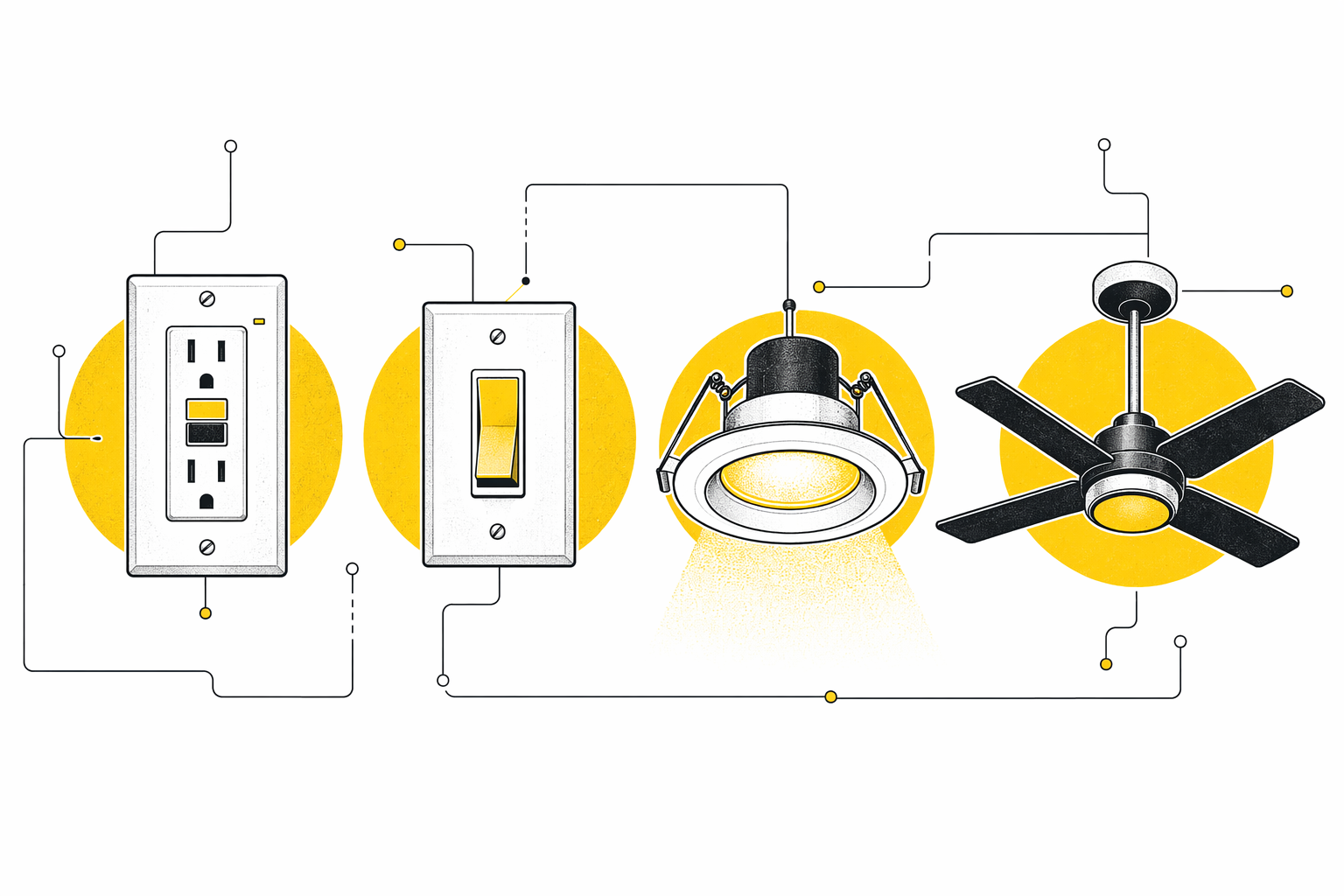
What this kind of electrical work includes
Outlet, switch, and lighting jobs can look simple from the outside. But the real work may involve the box in the wall, the wiring path, grounding, breaker capacity, GFCI or AFCI protection, fixture support, and permits in some areas.
Common jobs homeowners ask for include:
- Install a new outlet in a bedroom, living room, garage, or office
- Move an outlet or switch a short distance during remodeling
- Replace old, loose, cracked, or non-working switches and receptacles
- Upgrade 2-prong outlets to safer grounded solutions where allowed
- Add GFCI outlets in kitchens, bathrooms, garages, basements, laundry areas, or outdoors
- Replace a ceiling light, vanity light, chandelier, or recessed light
- Install dimmer switches, timer switches, motion-sensor switches, or smart switches
- Troubleshoot flickering lights, dead outlets, warm switches, or tripped breakers
Some jobs are quick swaps. Others turn into wiring work inside finished walls. That is why the price can vary a lot.
If the problem includes burning smells, smoke, sparks, shocks, or a hot outlet or switch, stop using that circuit and call a licensed electrician now. If there is smoke or fire, call 911. For urgent help, see emergency electrical.
How the job usually works
A good electrician will first figure out what you want, what is already there, and what the circuit can handle. Then they can tell you whether the job is a simple replacement, a new run, or part of a larger upgrade.
A typical process looks like this:
1. Walk-through and scope
- You show the exact outlet, switch, or fixture location.
- The electrician checks access, wall type, ceiling height, attic or crawlspace access, and the existing wiring.
2. Load and code check
- They see whether the circuit has room, whether GFCI or AFCI protection is needed, and whether the box and support are correct for the fixture.
3. Written price and scope
- Get the work in writing before any deposit. The paper should say what is included, what materials are included, and what could change the price.
4. Permit if required
- Some replacement work may not need one. New circuits, moved wiring, or more involved jobs may. Rules differ by city and county. Read electrical permits explained.
5. Installation and testing
- The electrician completes the work, tests the devices, and confirms polarity, grounding, and operation.
6. Final walkthrough
- You make sure switches control the right lights, dimmers work correctly, plates are straight, and cleanup is done.
If your home has old aluminum wiring, no grounding, a crowded panel, or repeated breaker trips, a small job may expose a bigger issue. In that case, the electrician may recommend broader repairs, rewiring, or a panel review.
Typical cost ranges
These are typical ranges and estimates, not quotes or guarantees. The real price depends on the panel, the wiring, the scope, the materials, permits, and your area.
Here are honest ballpark numbers many homeowners see:
- Service call / diagnostic visit: $120-$400
- Install or move one outlet: $150-$350
- Replace a basic outlet or switch: often falls near the lower end if wiring is already there and accessible
- GFCI outlet install or replacement: often more than a standard outlet because of device cost and testing
- Light fixture replacement: can be modest for a simple swap, but more for high ceilings, heavy fixtures, or bad existing boxes
- Add a new light where no wiring exists: usually costs more because it may require new cable runs, wall or ceiling access, and switching changes
- Dimmer, smart switch, timer, or motion device install: depends on compatibility, neutral wire availability, and setup time
- Electrician labor: many charge about $50-$130 per hour, while others use flat-rate pricing by job
What pushes the price up:
- No existing wiring at the new location
- Hard access through finished walls or ceilings
- Plaster, masonry, tile, or concrete surfaces
- Tall ceilings or heavy fixtures needing special support
- Old wiring that is unsafe, damaged, or not compatible
- Need for new breakers, AFCI, GFCI, or grounding work
- Permit and inspection requirements
If you want a broader view of electrical pricing, visit costs. The best way to judge a fair number is to compare written estimates for the same scope.
Timeline: what is fast, what takes longer
Many outlet, switch, and lighting jobs are done in one visit. But not all of them.
Often same day:
- Replace an existing outlet or switch
- Swap a basic ceiling light or vanity light
- Install a dimmer where the wiring is already compatible
- Replace a GFCI device
May take longer:
- Add a brand-new outlet where no power exists nearby
- Move switches or outlets during a remodel
- Add recessed lights across a room
- Troubleshoot a problem that is intermittent or affects multiple rooms
- Correct hidden issues like damaged wires, overfilled boxes, missing grounds, or mislabeled circuits
A realistic timing breakdown:
- Simple replacement: often under 1 hour to a few hours
- New outlet or new light with easy access: often a few hours to half a day
- Several devices across the house: half a day to a full day
- More involved wiring work with permits or patching coordination: 1 day to several days depending on scope
Ask one simple question before you book: Is this a replacement, or is it new wiring? That one answer usually tells you whether the job will be on the lower or higher end of the timeline and price range.
Safety and code issues homeowners should know
This is not good DIY territory. Electrical work is dangerous and regulated. Hire a licensed electrician.
The risks are not just shocks. Bad outlet, switch, or lighting work can lead to overheating, nuisance tripping, damaged electronics, failed inspections, and fire.
Important code and safety points that often matter:
- GFCI protection may be required in bathrooms, kitchens, garages, basements, laundry areas, crawlspaces, unfinished areas, and outdoors.
- AFCI protection may be required on many living-area circuits.
- Grounding and polarity must be correct.
- Box fill matters. Too many wires in a small box is not okay.
- Fixture support matters. Heavy lights and ceiling fans need proper-rated boxes.
- Wet and damp ratings matter outdoors and in some bathrooms.
- Tamper-resistant receptacles may be required in many homes.
- Permits may be required depending on the work and your local rules.
If your lights flicker when appliances run, outlets are loose, switches feel warm, or breakers trip often, do not ignore it. Those are signs the issue may be bigger than a bad device.
For basic homeowner awareness, read electrical safety basics. Then hire a licensed pro to inspect the problem.
What to ask before you hire
You do not need to know electrical code to ask smart questions. Use plain language and get clear answers.
Ask these before you say yes:
- Are you licensed, insured, and bonded for this work?
- Will you pull the permit if one is required?
- Is this price for a simple replacement, or does it include new wiring if needed?
- What exact materials are included? Brand, device type, plate color, fixture support, smart device setup, and cleanup
- What could change the price after you open the box or wall?
- Will you test for grounding, GFCI/AFCI needs, and circuit load?
- If you find old or unsafe wiring, what are my options?
- Will patching drywall or painting be included, or not?
- How long should the power be off?
- What warranty do you offer on workmanship?
Also ask for the price and scope in writing before any deposit. That protects you if the job changes halfway through.
A simple way to compare bids:
- Ask each electrician to price the same scope.
- Make sure materials are spelled out.
- Check whether permit costs are included.
- Watch for vague language like "as needed" with no limits.
- Do not choose on price alone if one estimate looks much thinner than the others.
VoltGuide can help you get matched with electricians so you can compare your options side by side. Matching is free to you.
How to vet an electrician and avoid getting burned
A neat truck and a fast promise are not enough. Verify the basics yourself.
What to do:
- Verify the license yourself. Do not rely only on a business card or text message.
- Confirm they are insured and bonded.
- Check that the business name on the estimate matches the license.
- Ask who will actually do the work at your home.
- Read recent reviews with attention to scheduling, communication, cleanup, and change orders.
- Be careful with very large deposits for small jobs.
- Never feel rushed into a same-minute decision unless it is a true emergency.
- Hold final payment until the agreed work is complete.
One more thing: the cheapest outlet or light job can become expensive if the wiring is done wrong and needs to be opened again later. Good electrical work is about safety, not just getting the light to turn on.
Use our hiring guide and how to check an electrician license before you book. You compare quotes. You choose who to hire. You hold the final payment.
If you need an outlet, switch, or light fixed or added, hire a licensed, insured, bonded electrician and verify the license yourself. Get the price and scope in writing, compare estimates, and do not ignore hot, sparking, or smoking devices.