Emergency electrical service
Some electrical problems can wait until morning. Others cannot. If you smell burning, see smoke or sparks, or anyone got shocked, stop using that circuit and call a licensed electrician now. If there is smoke or fire, call 911 first.
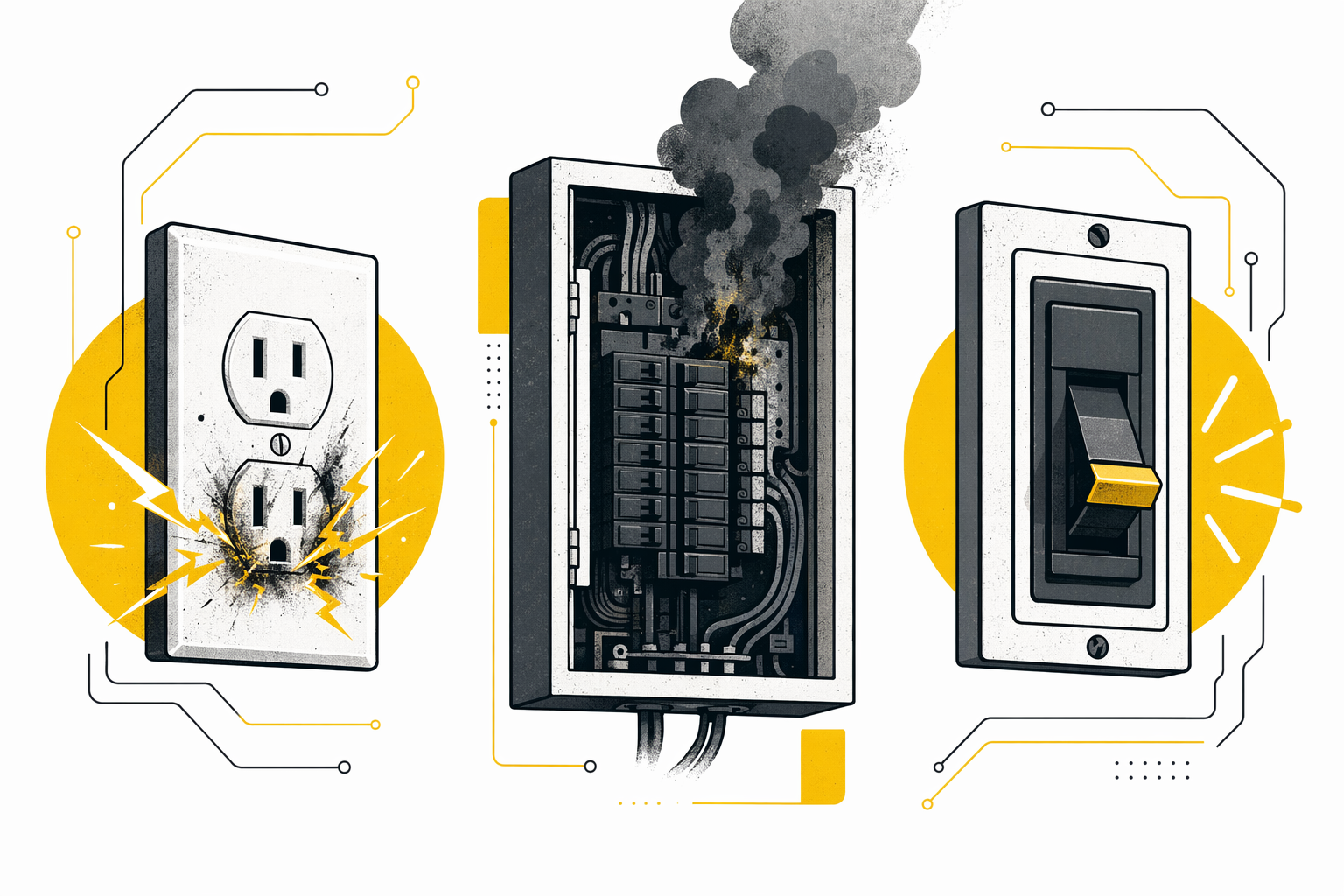
What counts as an electrical emergency
Not every outage is an emergency. But some signs mean stop using the affected circuit or equipment right away and get a licensed, insured, and bonded electrician involved.
Call now for problems like:
- Burning smell from an outlet, switch, panel, appliance cord, or wall
- Smoke, sparks, arcing, or sizzling sounds
- A breaker that will not stay on or trips again immediately
- Part of the home lost power while the rest still works, especially after flickering
- A panel, outlet, or switch that feels hot to the touch
- Water near electrical equipment after a leak, flood, or storm
- Shock or tingling when touching a switch, outlet, appliance, or metal surface
- A fallen mast, damaged service cable, or storm damage to electrical equipment
Call 911 first if there is smoke, visible fire, or an immediate danger to people.
Do not open the panel, replace breakers, pull outlets, or try to "make it work" yourself. Electrical work is dangerous and regulated. Hire a licensed electrician.
If your issue is urgent but not a fire, emergency electrical service is the right category to ask for when you get matched.
How emergency service works through VoltGuide
VoltGuide is free for homeowners. We do not perform electrical work. We help you understand the job and get matched with electricians so you can compare options and choose who to hire.
A typical emergency call looks like this:
- Tell us what happened. Give the problem, when it started, your ZIP code, and the best phone number. Photos can help if safe to take from a distance.
- We match you with local electricians. Participating electricians pay a flat fee to receive the lead. The matching is still free to you.
- You talk to the electrician directly. Describe the symptoms clearly: smell, sparks, loss of power, hot panel, flooding, storm damage, or repeated tripping.
- Ask for the service-call range and arrival window. Emergency jobs often have after-hours pricing.
- Get the scope and price in writing before any deposit. Even in an emergency, you should know what they plan to do first.
- Verify the license yourself. Use your state or local licensing system. Here is a simple guide: how to check an electrician license.
- You approve the work. You compare quotes, you choose who to hire, and you hold the final payment until the agreed work is done.
If the first visit is mainly to make things safe, the electrician may return later for a larger repair, permit, or replacement job.
Typical emergency electrical costs
Emergency electrical pricing is usually a mix of a service call plus labor and materials, or a flat rate for a common repair. These are typical ranges and estimates, not quotes or guarantees. The real price depends on the panel, the wiring, the scope, the materials, permits, and your area.
Common ranges homeowners see:
- Emergency service call: $120-$400
- Electrician labor: often $50-$130 per hour, or a flat rate per job
- Install or move an outlet: $150-$350
- Whole-house surge protector: $250-$500
- Panel upgrade to 200 amps: $1,800-$4,500
- Level 2 EV charger install: $600-$2,200
- Whole-house rewire: $8,000-$25,000+ depending on home size and access
Why emergency pricing can be higher:
- Night, weekend, or holiday dispatch
- Troubleshooting time when the cause is not obvious
- Older homes with crowded boxes, aluminum wiring, or damaged insulation
- Water intrusion or storm damage
- Permit and utility coordination for service equipment work
A late-night visit may only cover diagnosis and making the home safe. For example, the electrician may isolate a failed circuit, cap unsafe wiring, or recommend that the main stay off until a permitted repair is completed. If you want a broader sense of pricing on bigger jobs, see electrical costs after the immediate danger is handled.
What the electrician may do first
In a true emergency, the first goal is usually safety and damage control, not finishing every repair on the spot.
The electrician may:
- Test and isolate the failed circuit
- Inspect the panel, breakers, meter area, affected outlets, switches, and fixtures
- Identify heat damage, loose connections, overloads, water damage, or failing equipment
- Shut down unsafe circuits
- Replace a clearly failed device if the repair is straightforward and safe to complete then
- Recommend a follow-up visit for permitted work, parts, or larger corrections
Sometimes the emergency visit uncovers a bigger issue, such as:
- A panel that is overloaded, damaged, or outdated. Learn more about panel upgrades.
- Dangerous or deteriorated branch-circuit wiring. In some homes, partial or full rewiring may be needed.
Good electricians will explain the difference between:
- Immediate safety step: what must happen now
- Required repair: what should be fixed next
- Optional upgrade: what may improve capacity or convenience later
That separation matters. It helps you avoid paying emergency rates for work that can safely be scheduled another day.
Timeline, permits, and code
Emergency response times vary by area and weather, but many electricians can offer a same-day or after-hours visit for urgent problems. Simple fixes may be completed in one trip. Larger repairs can take longer if special parts, utility coordination, or permits are required.
A few honest things to expect:
- Troubleshooting takes time. The symptom you see may not be the real cause.
- Not all dangerous work can be finished immediately. Some jobs need a permit, inspection, utility disconnect, or replacement equipment.
- Code matters. Emergency work still has to follow local rules.
Examples where permits are commonly involved:
- Service equipment or meter/main work
- Major panel replacement or upgrade
- New circuits for larger loads
- Significant rewiring or fire damage repair
Ask the electrician:
1. Does this job need a permit in my city or county?
2. Who pulls the permit?
3. Will there be an inspection?
4. Is this a temporary safe fix or the final code-compliant repair?
If you are not sure how permits work, read electrical permits explained. It can help you ask better questions without slowing down a real emergency.
What to ask before you say yes
In a stressful moment, people often agree too fast. Slow down enough to ask a few direct questions.
Before the visit or before work starts:
- Are you licensed, insured, and bonded for this work in my area?
- What is your service-call charge and your after-hours rate?
- What is the earliest arrival window?
- Based on what I described, what is the most likely first step?
- Will you provide the price and scope in writing before any deposit?
Once the electrician is on site:
- What exactly failed?
- What needs to happen right now to make it safe?
- What can wait until normal business hours?
- Does any part of this need a permit or inspection?
- Are there any signs of a bigger issue in the panel or wiring?
- If you recommend replacement, what problem does that solve?
Watch for red flags:
- Refuses to show or provide license details
- Pushes for a large cash deposit before giving a written scope
- Will not separate emergency safety work from optional upgrades
- Tells you to ignore permits for major work
- Uses scare tactics instead of clear explanations
For a fuller checklist, see hiring an electrician guide.
Safety steps while you wait
You should not do electrical work yourself. Do not open the panel. Do not replace breakers. Do not remove outlets or switches. Hire a licensed electrician.
What you can do while waiting:
- If a specific device or appliance seems involved, stop using it
- If one switch or outlet is hot, sparking, smoking, or smells like burning, stay away from it
- Keep children and pets away from the area
- If safe, use another light source instead of forcing the bad circuit back on
- If water is near electrical equipment, keep clear and tell the electrician exactly where the water is
- Write down what happened: what tripped, what smelled hot, what lost power, and whether it happened during rain, appliance use, or charging a car
If there is smoke or fire, call 911.
If you want a simple overview of everyday precautions, electrical safety basics is a helpful read after the urgent issue is handled. When you are ready, you can get matched for free with local electricians and compare your options.
If you smell burning, see sparks or smoke, feel heat, or anyone got shocked, stop using that circuit and call a licensed electrician now. VoltGuide is free: we help you get matched with local licensed, insured, and bonded electricians, compare written prices, and choose who to hire.