House rewiring & new wiring
If your home has old, damaged, or unsafe wiring, rewiring may be the right fix. VoltGuide helps you understand the job and get matched, free, with licensed, insured, bonded electricians you can compare yourself.
When rewiring makes sense
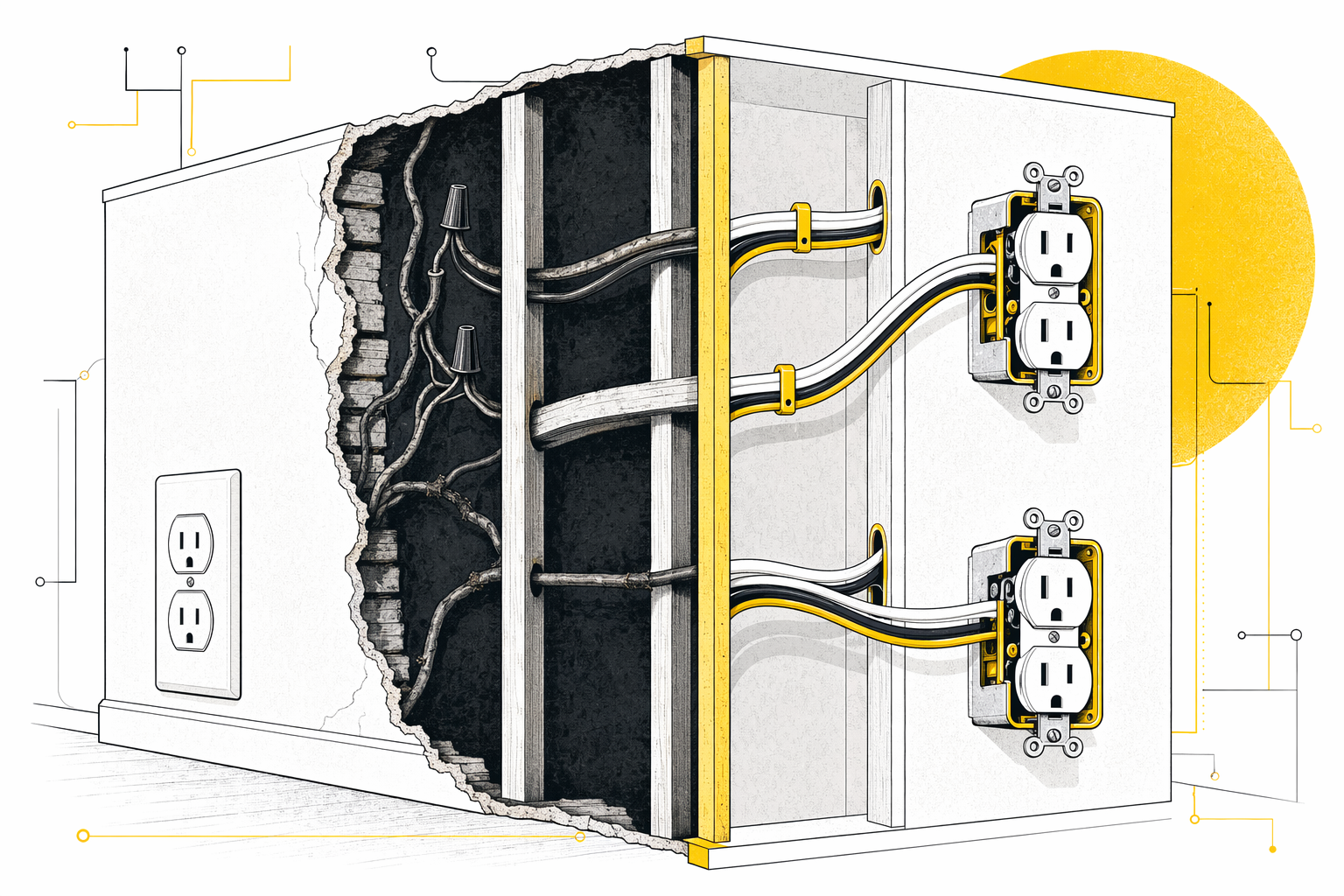
Rewiring is a big job, but sometimes it is the right one. It can solve safety problems, add capacity for modern appliances, and fix parts of a home that were wired in stages over many years.
Common reasons homeowners ask about rewiring:
- Old wiring materials such as knob-and-tube, cloth-covered wire, or aging aluminum branch wiring
- Frequent breaker trips or lights that dim when large appliances start
- Too few outlets and heavy use of power strips or extension cords
- Ungrounded outlets in older rooms
- A major remodel, addition, or layout change that needs brand-new circuits
- Damage from water, pests, heat, or past poor-quality work
A full rewire is not always necessary. Some homes only need partial rewiring in certain rooms, a new dedicated circuit, or a panel upgrade along with selected wiring changes. A licensed electrician can inspect the home, explain the scope, and tell you what is required by local code.
If you notice a burning smell, smoke, sparks, hot outlets, or shocks, stop using that circuit and call a licensed electrician now. If there is smoke or fire, call 911.
What a house rewiring job usually includes
People say "rewiring" to mean a few different things. The actual scope matters a lot because it changes cost, timeline, wall damage, and permit needs.
A rewiring project may include:
- Removing or disconnecting unsafe old wiring where allowed and practical
- Running new cables to outlets, switches, lights, smoke alarms, appliances, HVAC, garage, exterior areas, or additions
- Adding grounded outlets and bringing required locations up to code
- Installing AFCI and GFCI protection where local code requires it
- Adding dedicated circuits for kitchen, laundry, bathroom, microwave, dishwasher, disposal, EV charger, or workshop loads
- Replacing devices and fixtures if that is part of the written scope
- Connecting the new wiring to the electrical panel and labeling circuits clearly
- Coordinating permits and inspections as required by your city or county
If the home is being opened up for a remodel, access is easier and labor can be lower. If walls and ceilings are finished and hard to reach, the electrician may need to cut access holes. Patch and paint work is often not included unless the contract says it is.
For homes that need broad system updates, you may also want to read about rewiring costs and what affects them most.
Typical cost ranges
House rewiring costs vary a lot. The real price depends on the panel, the wiring, the scope, the materials, permits, and the area. It also depends on home size, access, whether the house is occupied, and whether the electrician is doing a full rewire or targeted new wiring.
Typical ranges homeowners often see:
- Service call: $120-$400
- Install or move one outlet: $150-$350
- Whole-house surge protector: $250-$500
- Level 2 EV charger install: $600-$2,200
- Panel upgrade to 200A: $1,800-$4,500
- Whole-house rewire: $8,000-$25,000+ depending on size and complexity
- Electrician labor: often $50-$130 per hour or a flat rate per job
What pushes the cost up:
- Larger homes or multi-story homes
- Plaster walls, finished basements, or tight attic/crawlspace access
- Panel replacement or service upgrade needed at the same time
- More circuits for modern kitchens, baths, HVAC, office equipment, or EV charging
- Permit and inspection fees
- Repairing hidden problems found after walls are opened
What can keep costs lower:
- Doing the work during a planned remodel
- Clear access to attic, crawlspace, and panel
- Partial rewiring instead of a full-home rewire, when safe and allowed
- Choosing standard devices unless specialty fixtures are needed
Ask for the price and scope in writing before any deposit. Make sure the written scope says what is included, what is excluded, and who handles permits and patching. You can also compare more everyday price ranges on the costs page.
How the process usually works
A good rewiring job should feel organized, not confusing. Here is the normal flow:
1. Walk-through and assessment
The electrician looks at the panel, visible wiring, outlets, grounding, service size, and the rooms involved. They may note signs of older wiring or overloaded circuits.
2. Written scope and estimate
You get a written estimate with the work list, rough timeline, permit responsibility, exclusions, and payment schedule. This is an estimate, not a guarantee.
3. Permit planning
Many rewiring jobs require permits and inspection. Follow local rules. If a contractor tells you to skip permits for a big wiring job, that is a warning sign. Read electrical permits explained if you are not sure why this matters.
4. Rough-in work
The electrician runs new cable, sets boxes, and prepares circuits. Power may be shut off to parts of the home during parts of the job.
5. Inspection, if required
The local inspector checks the permitted work before walls are closed, where required.
6. Finish work
Devices, fixtures, cover plates, labeling, and final connections are completed.
7. Final walk-through
Before final payment, make sure you understand which circuits serve which rooms, what was updated, and whether any patch/paint work remains.
You compare quotes. You choose who to hire. You hold the final payment until the agreed work is completed.
Timeline and what to expect in your home
A small new-wiring job may take a few hours. A partial rewire may take 1-3 days. A full-house rewire often takes several days to two weeks or more, depending on home size, access, permit timing, and whether the home is occupied.
What homeowners are often surprised by:
- Power interruptions: some circuits may be off during work
- Small wall or ceiling openings: especially in finished homes
- Noise and dust: drilling, fishing cable, opening access points
- Schedule changes: hidden issues can appear once old wiring is exposed
- Coordination with other trades: drywall, patching, painting, and inspections may affect timing
Ask these practical questions before work starts:
- Will we need to move furniture or clear closets?
- Which rooms will be without power, and when?
- Is patching included, or do we hire that separately?
- Can we stay in the home during the project?
- What could change the estimate after work begins?
If your project also includes a garage charger, workshop circuits, or heavier modern loads, it is smart to mention that before the estimate so the electrician can size circuits correctly. For charger-specific work, see EV charger installation.
Safety, permits, and code matter here
Electrical work is dangerous and regulated. Rewiring is not a DIY job. Do not open the panel, replace breakers, or try to run new wiring yourself. Hire a licensed electrician.
A good contractor will explain:
- Whether your project needs a permit
- Whether your panel has enough capacity for the added circuits
- Where code requires GFCI, AFCI, tamper-resistant receptacles, grounding, bonding, and smoke/CO alarm updates
- Whether old wiring can remain in place disconnected, or must be removed in certain areas
- Whether the service size is adequate for your home now
Safety issues should never be brushed off as "normal old house stuff." If you have flickering lights, buzzing outlets, warm switches, sparks, burning smell, or repeated breaker trips, treat that as a warning. Stop using the affected circuit and call a licensed electrician. If there is active smoke or fire, call 911.
For a simple homeowner overview, read electrical safety basics.
How to hire the right electrician
This is where many homeowners get burned. The cheapest price is not always the best value, and a vague estimate can get expensive later.
Use this checklist:
- Hire only licensed, insured, and bonded electricians
- Verify the license yourself with your state or local licensing board
- Ask if they regularly do older-home rewiring or the specific type of new wiring you need
- Get the scope, materials, permit responsibility, schedule, and payment terms in writing
- Ask what is excluded, especially drywall patching, painting, permit fees, and fixture replacement
- Ask who will be on site and whether subcontractors are used
- Do not pay the full amount up front
- Keep final payment until the agreed work is completed and you have any required inspection sign-off
Good questions to ask:
- Have you rewired homes like mine before?
- Will you check whether the panel needs an upgrade too?
- Which parts of the house will you open, and how much patching should we expect?
- Will you pull permits and schedule inspections?
- What could change the estimate once work begins?
If you want help finding companies to compare, get matched for free. VoltGuide does not do electrical work. We help you connect with electricians so you can compare options and choose.
If your home has old, unsafe, or overloaded wiring, hire a licensed, insured, bonded electrician to inspect it and explain whether you need partial rewiring, a full rewire, or a panel upgrade. Get the scope, permits, and estimated price in writing, compare quotes, and do not make a final payment until the agreed work is done.