Electrical permits & inspections explained
Electrical permits and inspections can feel confusing, but they matter. They help make sure electrical work follows local code and is checked before dangerous problems get hidden behind walls.
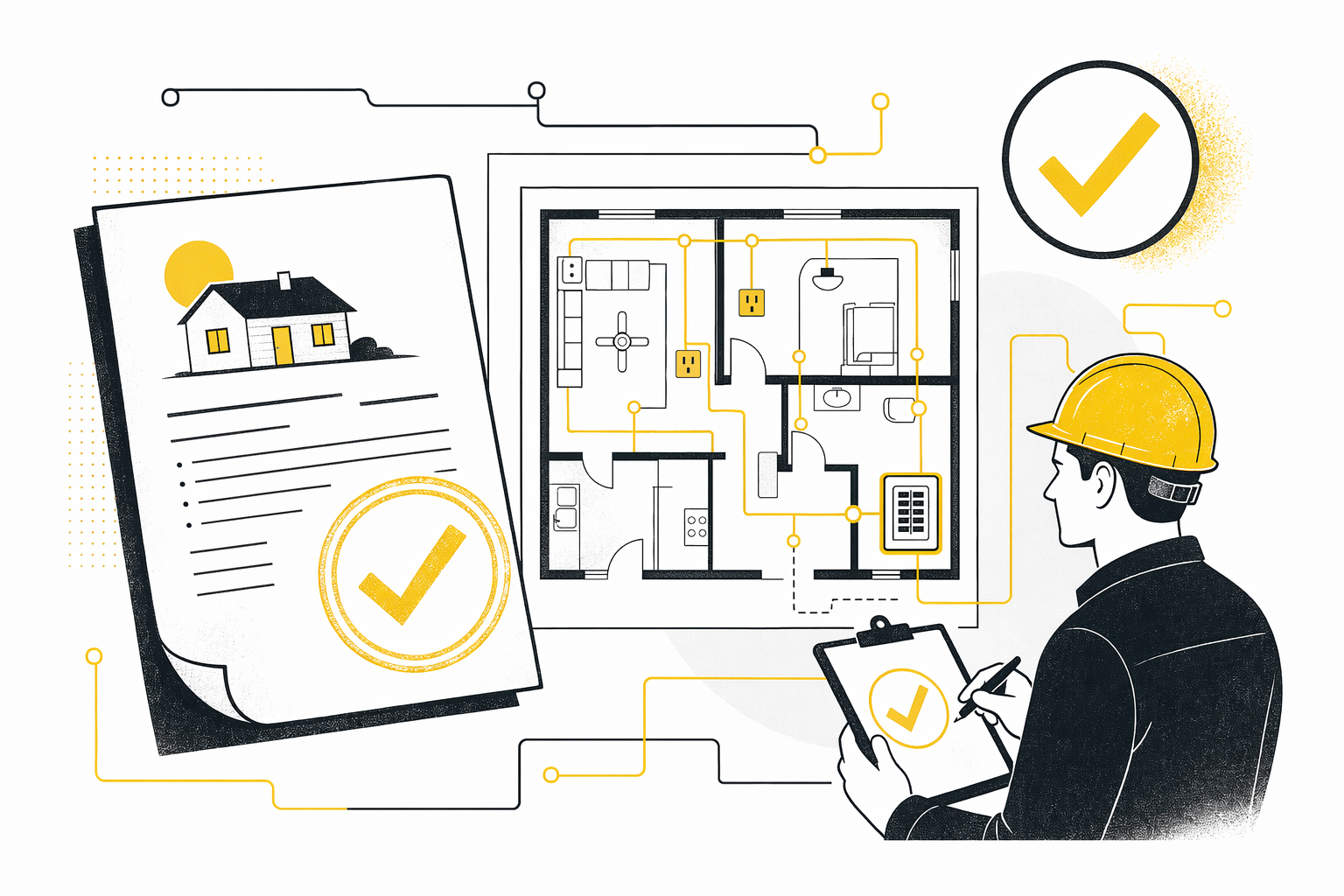
Why permits and inspections matter
A permit is official approval from your city, county, or other local building department to do certain electrical work. An inspection is the check that usually happens during or after the job to see whether the work appears to meet local code.
For homeowners, this is not just paperwork. Electrical work is dangerous and regulated. Bad wiring can lead to shocks, damaged equipment, failed home sales, insurance headaches, or fire risk. That is why you should hire a licensed, insured, and bonded electrician and verify the license yourself before work starts.
In many areas, permits are commonly required for bigger jobs like panel replacements, service upgrades, rewiring, adding new circuits, EV charger installation, or work related to additions and remodels. Small repairs may or may not need a permit depending on local rules.
Rules are local. One city may require a permit for work another city treats differently. The safe move is simple: ask the electrician what permit is required, who is pulling it, and which department will inspect it. You can also review electrical permits explained if you want a quick overview before you talk to anyone.
When a permit is often needed
Every area is different, but homeowners often need permits for work like:
- Panel upgrades or replacements, including changing to 200-amp service
- Adding a new circuit for an appliance, workshop, hot tub, mini-split, or other load
- Whole-house or partial rewiring
- EV charger installation, especially Level 2 chargers
- Service mast, meter, or service entrance work
- Adding outlets, lighting, or wiring as part of a remodel or room addition
- Generator interlock or transfer equipment
Some minor repairs may not need a permit in some places, but do not guess. For example, replacing a damaged receptacle might be treated differently from adding a brand-new outlet location. The rule depends on the scope and your local code office.
If your job involves a panel, service equipment, hidden wiring in walls, or a new circuit, there is a good chance permits and inspections will be part of the process. For bigger jobs, you can also read about panel upgrades or rewiring so you know what questions to ask.
Do not do this yourself. Do not open the panel, swap breakers, or attempt wiring work. Hire a licensed electrician.
Who pulls the permit, and what the process usually looks like
A common mistake is letting work start before anyone is clear on the permit. In most cases, the electrician or contractor handling the job should tell you whether a permit is required and who will pull it.
A normal process often looks like this:
- The electrician looks at the job. They assess the panel, wiring, load, access, and scope.
- They explain whether a permit is likely required. Ask them to put this in writing.
- The permit is applied for with the local authority. This may be the city, county, or another jurisdiction.
- Work is scheduled. Some jobs have a rough inspection before walls are closed, and a final inspection at the end.
- The inspector checks the work. If corrections are needed, the electrician returns and fixes them.
- You keep the records. Save the permit number, inspection results, invoice, and scope of work.
Ask these direct questions before you hire:
- Will this job need a permit in my area?
- Who is pulling the permit?
- Are permit fees included in the written price?
- Will there be a rough and final inspection?
- Will you be present if the inspector has questions?
- What happens if the inspector requires corrections?
Get the price and scope in writing before any deposit. Also confirm the electrician is licensed, insured, and bonded, and check the electrician license yourself.
Prices are separate from permit rules. As a general estimate, electricians often charge $50-$130 per hour or a flat rate per job. Typical project ranges may include $600-$2,200 for a Level 2 EV charger install or $1,800-$4,500 for a 200A panel upgrade, but the real price depends on the panel, the wiring, the scope, the materials, permits, and the area.
What inspections usually look for
An inspection is not there to annoy you. It is meant to catch obvious code and safety problems before they become expensive or dangerous.
What an inspector may look at depends on the job, but often includes:
- Whether the installed equipment matches the approved scope
- Whether wire size, breaker size, grounding, bonding, and protection appear appropriate for the job
- Whether boxes, devices, and connections are installed correctly
- Whether required clearances, labeling, and access are met
- Whether the work appears neat, complete, and code-compliant for the local jurisdiction
The inspector may pass the work, fail it, or approve it with corrections needed. If corrections are required, that does not automatically mean the electrician is terrible. Sometimes local inspectors want a detail handled a specific way. What matters is whether the electrician responds quickly and fixes it properly.
If you smell burning, see sparks, get shocks, notice smoke, or a circuit is acting dangerously, stop using that circuit and call a licensed electrician now. If there is smoke or fire, call 911. For urgent issues, use an emergency electrical service.
If you want a basic overview of what safe electrical conditions should look like around the home, start with electrical safety basics.
Common permit mistakes that cost homeowners money
These are the mistakes that come back later during a sale, insurance claim, remodel, or inspection:
- Starting work without asking about permits. Homeowners often assume the electrician will handle it, but nobody confirmed it.
- Accepting verbal promises only. If permit responsibility is not in writing, problems can turn into your problem.
- Hiring unlicensed workers for permit-heavy jobs. This is risky with panels, service changes, rewiring, and EV chargers.
- Closing walls too soon. Some work needs inspection before drywall goes back up.
- Paying too much upfront. Keep control by getting the scope and price in writing and holding final payment until the work is complete.
- Not saving paperwork. Keep invoices, permit numbers, inspection sign-offs, and photos.
- Assuming a passed inspection covers everything. An inspection is important, but it is not a lifetime warranty.
Remember: you compare quotes, you choose who to hire, and you hold the final payment. VoltGuide is a free matching service. We help homeowners connect with electricians, but we do not perform electrical work, give bids, or inspect jobs.
What to do next
If you think your project may need a permit, keep it simple:
- Write down the job in plain language: panel change, new circuit, EV charger, rewire, added outlets, remodel wiring, or emergency repair.
- Ask at least two electricians whether a permit is required in your specific city or county.
- Verify each electrician is licensed, insured, and bonded.
- Get the scope, permit responsibility, estimated timeline, and total pricing method in writing before any deposit.
- Keep copies of all paperwork.
If you need help finding someone, get matched with licensed, insured, bonded electricians at no cost to you. Matching is free for homeowners. Participating electricians pay a flat fee to be included.
If you want to understand likely project pricing before you talk to anyone, see our costs guide. Just remember: all numbers are typical estimates, not quotes or guarantees. The real price depends on the panel, the wiring, the scope, the materials, permits, and the area.
For many electrical jobs, especially panels, new circuits, rewiring, and EV chargers, a permit and inspection may be required. Hire a licensed, insured, bonded electrician, verify the license yourself, get the scope and permit responsibility in writing, and do not let electrical work start until the permit question is clear.