EV charger (Level 2) installation
A Level 2 charger can make EV ownership much easier, but the real price depends on your panel, wiring path, charger size, permits, and local labor rates. VoltGuide is a **free matching service** that helps you compare licensed, insured, bonded electricians so you can choose the right pro for the job.
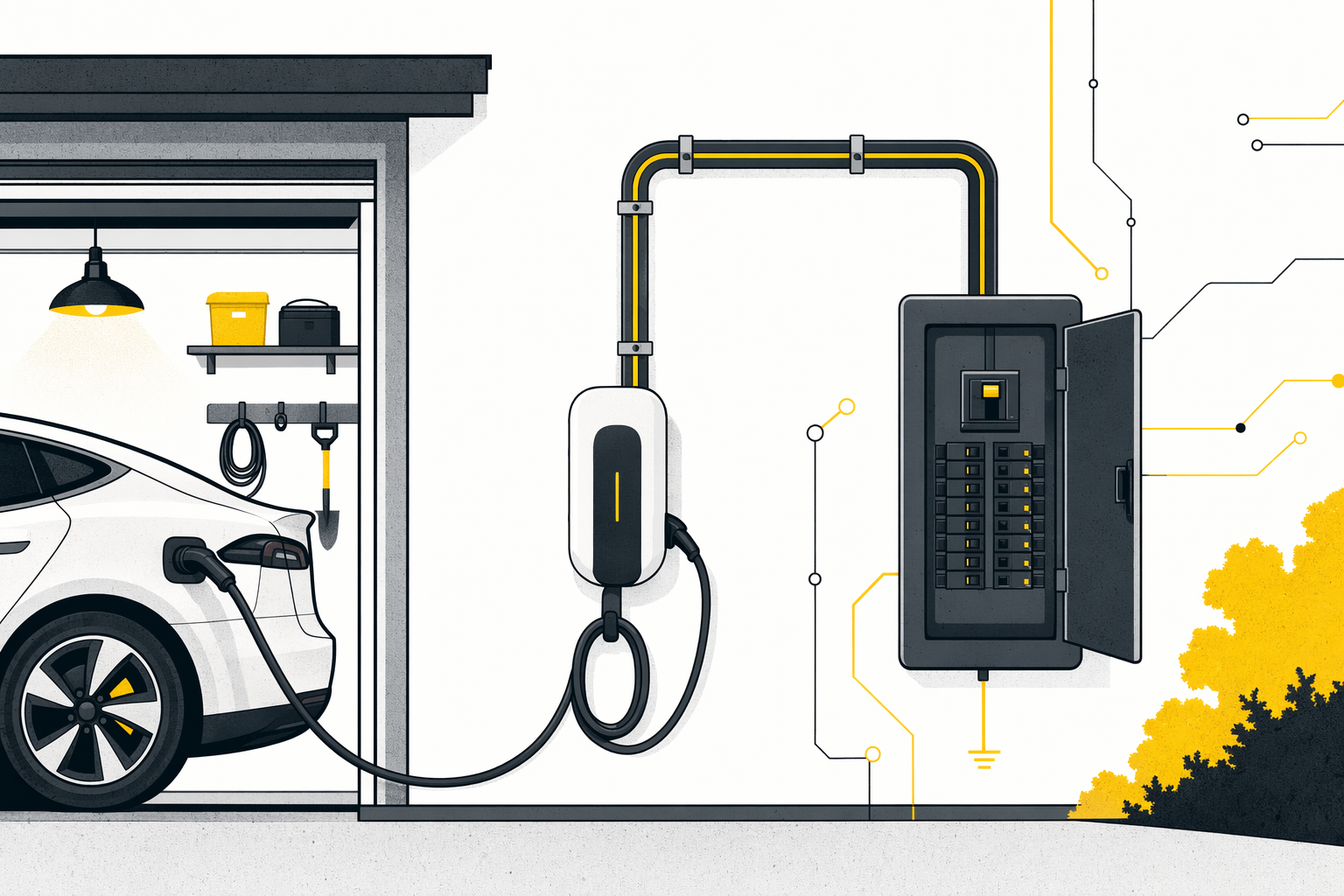
What a Level 2 charger installation usually includes
A Level 2 EV charger runs on 240 volts and charges much faster than a standard wall outlet. For many homeowners, that means overnight charging instead of waiting all day.
A typical installation may include:
- checking your electrical panel capacity
- confirming the charger size and circuit requirements
- installing a new dedicated 240V circuit
- running wire from the panel to the garage, driveway, or exterior wall
- mounting a hardwired charger or adding the right receptacle if the manufacturer allows it
- labeling the circuit and testing the setup
- handling permits and inspection if required locally
Some homes are simple. Others are not. A short run from the panel to an attached garage usually costs less than a long wire run to a detached garage or parking area. If your panel is full, outdated, or undersized, the electrician may recommend a panel upgrade first. You can read more about that here: panel upgrades.
Important: EV charging equipment should be installed by a licensed electrician. Electrical work is dangerous and regulated. Do not try to add a 240V circuit yourself.
How the process works, step by step
Here is the usual process from first call to finished job:
- Share the basics. Tell the electrician your EV model, charger brand if you already bought one, where you want it installed, and where the panel is located.
- Site check. The electrician looks at the panel, available breaker space, service size, wire path, mounting location, and whether the charger will be indoors or outdoors.
- Load review. They check whether your current service can support the charger along with the rest of the home. This matters in homes with electric ranges, dryers, HVAC equipment, hot tubs, or other large loads.
- Scope and written price. Get the scope, materials, permit responsibility, and total estimated price in writing before any deposit.
- Permit and scheduling. Many areas require a permit and final inspection. Follow local code and permit rules.
- Installation day. The electrician installs the circuit, breaker, wiring, disconnects if needed, and charger or receptacle.
- Testing and walkthrough. They test operation and explain basic use, breaker labeling, and any manufacturer instructions.
If you are just starting, get matched to compare electricians. It is free for homeowners. You compare quotes, you choose who to hire, and you hold the final payment until the work is complete.
Typical cost range for a Level 2 EV charger install
For most homes, a typical Level 2 EV charger installation costs about $600-$2,200. That is an estimate, not a quote. The real price depends on the panel, the wiring, the scope, the materials, permits, and your area.
Common cost factors:
- Distance from panel to charger. Longer runs usually mean more wire, more labor, and sometimes drywall or exterior work.
- Panel capacity and breaker space. If the panel is full or too small, the project can get much more expensive.
- Charger amperage. Higher charging speeds may require heavier wire and larger breakers.
- Mounting location. Attached garage is often simpler than detached garage, carport, or outdoor pedestal-style placement.
- Hardwired vs. plug-in setup. Manufacturer requirements and code may affect labor and materials.
- Permits and inspection. Some cities or counties charge permit fees.
- Older wiring conditions. Older homes may need additional corrective work.
Related typical prices homeowners often ask about:
- service call: $120-$400
- whole-house surge protector: $250-$500
- panel upgrade to 200A: $1,800-$4,500
- electrician labor: often $50-$130/hr or a flat rate per job
If the charger install turns into a larger electrical project, costs can rise fast. A panel upgrade or significant rewiring is separate work, not a small add-on. For broader pricing help, see costs and EV charger installation.
What can make the job simple or expensive
Homeowners often get surprised by the same issues. Here is where the price usually moves:
Usually simpler and lower cost
- panel has open space for a new breaker
- enough service capacity already exists
- charger goes on a nearby garage wall
- short, direct wiring route
- no trenching, no major wall repair, no panel changes
Usually more complex and higher cost
- panel is full, obsolete, damaged, or undersized
- detached garage or long outdoor wire run
- masonry, finished ceilings, or limited access for routing cable
- required service upgrade or subpanel work
- HOA, city, or utility requirements
- outdoor installation needing weather-rated equipment
In some homes, the electrician may suggest load management options or a lower charging rate instead of a full service upgrade. That can be a practical solution, but the right setup depends on your home and your vehicle needs.
If your house has old wiring or other known electrical issues, ask the electrician to explain how that affects the EV charger scope in plain language. If the answer is vague, keep comparing.
Timeline, permits, and inspections
A straightforward installation can sometimes be finished in half a day to one day once materials and permits are ready. But that does not mean every job is fast.
Typical timeline:
- 1-3 days to schedule an estimate in many areas, sometimes longer in busy seasons
- a few days to a couple of weeks for permit approval, depending on the city or county
- same day to one day for a simple install
- longer if the job also needs a panel upgrade, trenching, drywall repair, or utility coordination
Permits matter for a reason. They help make sure the work follows local code and that the charger circuit is properly sized and protected. Do not let anyone tell you to skip required permits to save money.
Before work starts, ask:
- Who is pulling the permit?
- Is inspection included in the written scope?
- What exact charger circuit size is being installed?
- Will the work require utility coordination or service changes?
For a plain-language overview, read electrical permits explained.
Safety and code: what homeowners should and should not do
This is not a DIY project. A Level 2 charger uses high-voltage equipment and must be matched correctly to the panel, breaker, wire size, and charger requirements.
Do not open the panel, replace breakers, run 240V wiring, or try to "make it work" with adapters or extension cords. That is unsafe and can violate code.
Use these homeowner-safe steps instead:
- choose a charger model that fits your vehicle and parking setup
- take photos of the panel, parking area, and the path between them for quote discussions
- ask whether the charger should be hardwired or plug-in based on manufacturer instructions and local code
- verify that the electrician is licensed, insured, and bonded
- verify the license yourself before hiring
If you notice a burning smell, smoke, sparks, repeated breaker trips, heat at the outlet or charger, or any shock, stop using the circuit and call a licensed electrician now. If there is smoke or fire, call 911.
For general homeowner guidance, see electrical safety basics.
What to ask before you hire an electrician
The right questions can save you money and trouble. Keep it simple and get clear answers.
Ask these before you say yes:
- Are you licensed, insured, and bonded for this work in my area?
- Can I have your license number so I can verify it myself?
- Have you installed this charger brand or similar Level 2 chargers before?
- Does my panel have enough capacity, or do I need other work first?
- Is the price a flat rate or time-and-materials? What exactly is included?
- Who pulls the permit and handles inspection?
- What charger size and circuit size are you proposing, and why?
- What is excluded from the price? Drywall repair, trenching, permit fees, utility work, or panel upgrades are common exclusions.
- What is the timeline from permit to final inspection?
- What payment schedule do you require?
Good contractors put the price and scope in writing before any deposit. If one estimate is much lower than the others, ask what is missing.
To vet a pro, use how to check an electrician license and hiring an electrician guide.
A Level 2 EV charger usually costs about $600-$2,200 to install, but the real price depends on your panel, wire run, permits, and local labor. Hire a licensed, insured, bonded electrician, verify the license yourself, get the scope and price in writing, and do not try to install a 240V charger circuit yourself.