Signs you need an electrician now
Some electrical problems can wait a day. Others should not. If you notice heat, burning smells, sparks, shocks, or repeated breaker trips, stop using that circuit and call a licensed electrician now.
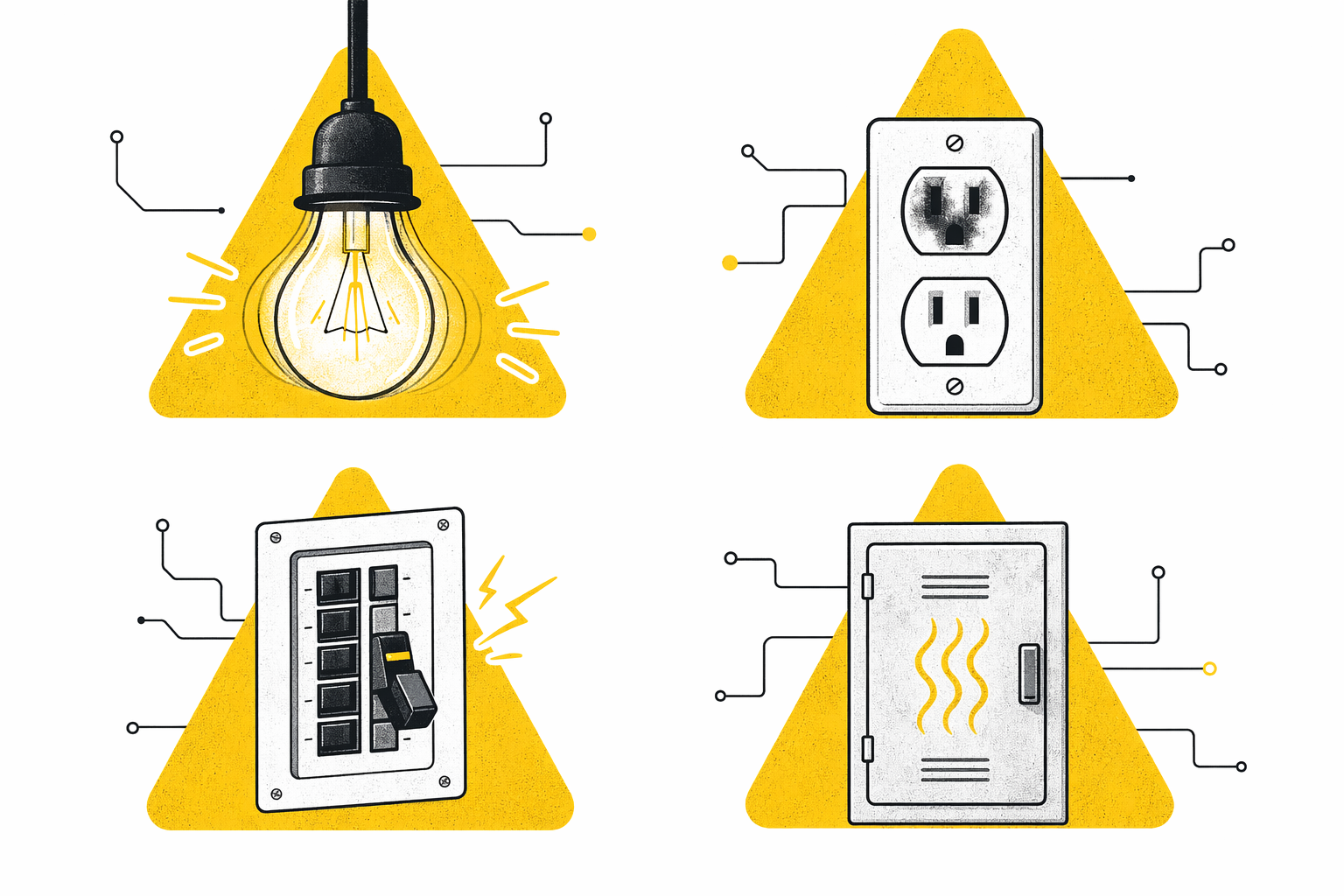
The warning signs homeowners should take seriously
Electrical problems often start small. A light flickers. One outlet stops working. A breaker trips once, then again. It is easy to hope it will go away. That is where people get burned.
Call a licensed electrician soon if you notice:
- breakers that trip more than once
- lights that flicker or dim when appliances turn on
- outlets or switches that feel warm or hot
- buzzing, humming, or crackling sounds from outlets, switches, or the panel
- a burning smell near an outlet, switch, cord, or panel
- sparks when plugging in something, or sparks from a switch or outlet
- a mild shock or tingling feeling when touching a switch, outlet, appliance, or metal cover
- outlets that are loose, dead, discolored, or have black marks
- extension cords used as a long-term fix
- two-prong outlets where grounded outlets are needed
- old wiring concerns, including cloth wiring, aluminum branch wiring, or signs of a partial rewire
These signs can point to loose connections, overloaded circuits, damaged wiring, bad devices, aging panels, or code and permit problems from old work. The right fix depends on the panel, wiring, scope, materials, permits, and your area.
If you think the issue may involve the service panel, old wiring, or not enough power for your home, these guides may help you understand the job before you hire: panel upgrades and rewiring.
Stop-everything emergencies
Some problems are not "watch and wait" problems.
Stop using the circuit and call a licensed electrician now if you have:
- a burning smell from an outlet, switch, appliance connection, or panel
- smoke from any electrical device or wiring area
- visible sparks coming from an outlet, switch, panel, or inside a wall
- a shock from a switch, outlet, appliance, or metal fixture
- a breaker that will not stay on and trips immediately
- water near electrical equipment after a leak or flood
- a panel that feels hot, shows scorch marks, or makes loud buzzing sounds
If there is smoke or fire, call 911.
Do not open the panel. Do not replace a breaker yourself. Do not pull outlets or switches out of the wall to "check" the wires. Electrical work is dangerous and regulated. Hire a licensed, insured, and bonded electrician and follow local permits and code.
If power loss, burning odor, or sparking needs urgent attention, see emergency electrical for what to expect when you reach out.
What to do right now
If you think you need an electrician, keep it simple:
- Stop using the problem circuit or device. Unplug what you safely can. If a specific outlet or switch seems involved, leave it alone.
- Watch for heat, smell, sound, or smoke. Warm covers, burning odor, buzzing, or discoloration matter.
- Write down what happened. Example: "Kitchen lights dim when microwave starts" or "Bedroom breaker trips every night with window AC on."
- Take photos only if safe. Surface photos of scorch marks, damaged covers, or the panel label can help. Never remove covers.
- Call a licensed electrician. Ask if they are licensed, insured, and bonded. Verify the license yourself before you book. Here is a simple guide: how to check an electrician license.
- Get the scope and price in writing before any deposit. Make sure the written scope says what is included, what permit is needed, and what could change the cost.
Typical pricing is usually an estimate, not a quote you can count on until the electrician sees the job. A service call is often about $120-$400. Electricians often charge about $50-$130 per hour or a flat rate per job. The real price depends on the panel, wiring, scope, materials, permits, and the area.
VoltGuide is a free matching service. We help you compare options from electricians. You choose who to hire. Start here: get matched.
Problems people often ignore too long
Not every electrical issue looks dramatic. These are common situations where homeowners wait too long:
Repeated breaker trips
A breaker that trips once during a storm may be one thing. A breaker that trips again and again usually means overload, a fault, a bad breaker, or another wiring problem. Resetting it over and over is not a fix.
Warm outlets and switches
A cover plate that feels warm can mean loose wiring, overloading, or failing devices. Heat is a warning sign.
Flickering with large appliances
If lights dim when the AC starts, when the microwave runs, or when the dryer turns on, you may have a circuit issue, shared-load problem, loose connection, or service capacity problem.
Old outlets and missing grounding
Two-prong outlets, loose receptacles, or outlets with no GFCI protection where needed can be signs your home needs updates for safety and daily use.
Too few outlets
If one room depends on power strips and extension cords all the time, the home may need more outlets or circuit changes. A typical outlet install or move often runs about $150-$350, but the real cost depends on access, wiring path, box type, finishes, permits, and area.
Adding new big loads
Planning an EV charger, hot tub, new range, or workshop equipment can expose that the current panel or wiring is not enough. A Level 2 EV charger install often falls around $600-$2,200. A 200-amp panel upgrade often runs about $1,800-$4,500. These are typical ranges only. Real pricing depends on the panel, service capacity, wiring distance, permits, utility coordination, materials, and your area.
If you are trying to understand likely price ranges before you call, see costs.
Common mistakes that make things worse
People usually do not mean to make electrical problems worse. But these mistakes are common:
- Using DIY videos as a plan. Online videos cannot see your panel, wiring condition, local code, or permit rules.
- Replacing a breaker yourself. The panel is not a beginner project. Do not open it.
- Ignoring a burning smell because it stopped. Intermittent problems are still real problems.
- Using extension cords as permanent wiring. That is a workaround, not a safe fix.
- Hiring only on the lowest price. A very low number can leave out permit work, code fixes, or needed troubleshooting.
- Paying a large deposit without a written scope. Get the price, scope, permit responsibility, and exclusions in writing first.
- Not checking the license yourself. Always verify.
A good electrician should explain the likely cause in plain language, tell you whether a permit is needed, and give you a written scope before work starts. It also helps to know the basics of permits and safe hiring before you compare bids. Read electrical permits explained if you want a quick overview.
Your next step: compare carefully and stay in control
You do not need to know how to fix the wiring. You do need to know how to hire smart.
Use this checklist:
- Hire licensed, insured, and bonded electricians.
- Verify the license yourself.
- Ask what permits and inspections may apply.
- Get the scope and price in writing before any deposit.
- Compare what is included, not just the bottom-line number.
- Keep the final payment until the agreed work is done.
VoltGuide is here to make that easier, especially if English is not your first language. The matching service is free to homeowners. Participating electricians pay a flat fee to be included. You compare estimates, ask questions, and choose who to hire.
If something feels unsafe, trust that feeling. Electrical trouble is not a good place to gamble.
If you smell burning, see sparks or smoke, feel a shock, or have a breaker that keeps tripping, stop using that circuit and call a licensed electrician now. Do not do electrical work yourself. Compare licensed, insured, bonded electricians, verify the license, and get the scope and price in writing before you pay a deposit.