GFCI & AFCI protection explained
GFCI and AFCI protection are two different safety features in a home electrical system. They can help reduce shock and fire risk, but they do different jobs, and the right fix depends on your panel, wiring, devices, and local code.
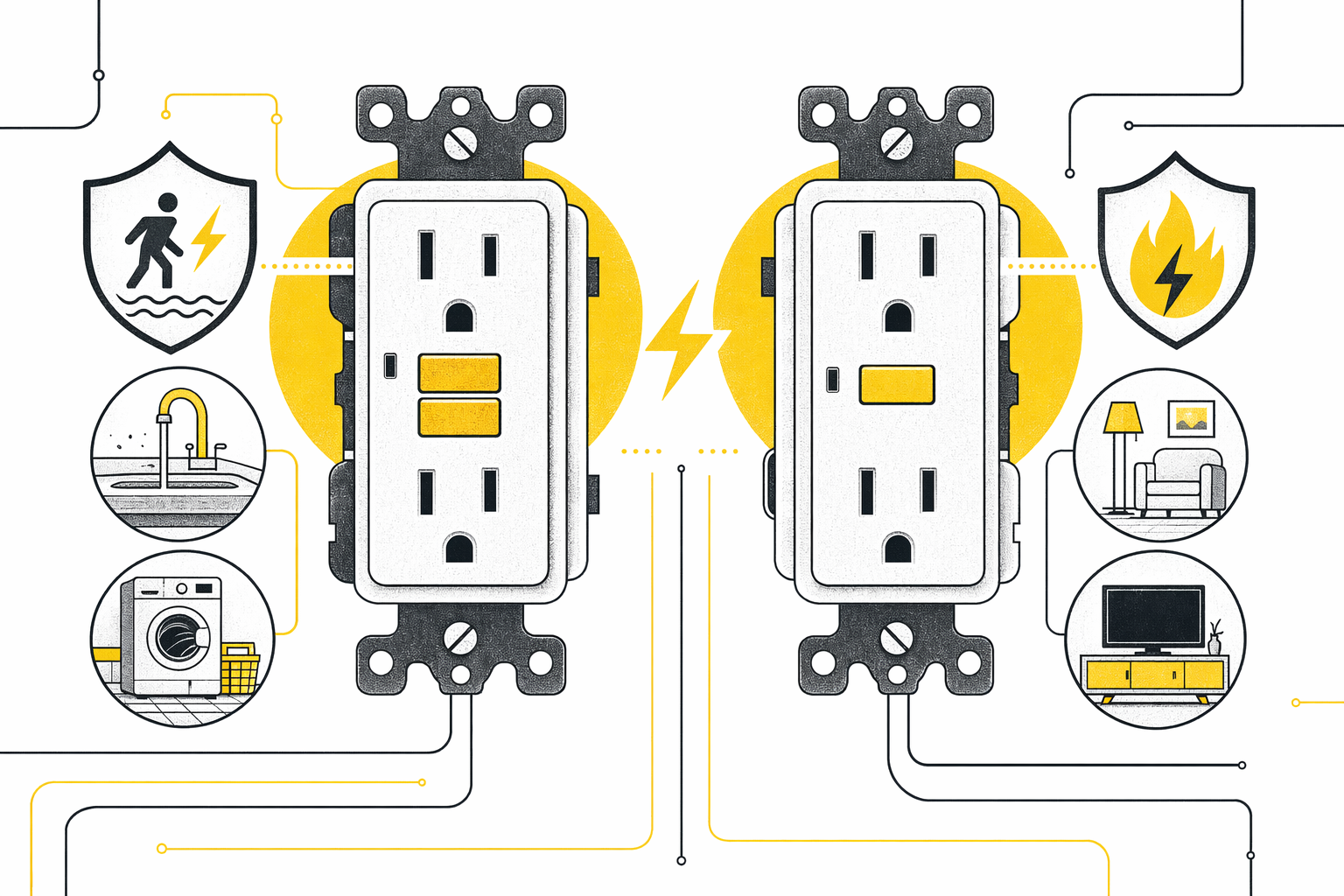
What GFCI and AFCI actually do
GFCI stands for ground-fault circuit interrupter. Its job is to help protect people from electric shock. It watches the flow of electricity. If it senses current going somewhere it should not, like through water or a person, it shuts the circuit off fast.
AFCI stands for arc-fault circuit interrupter. Its job is to help reduce the chance of an electrical fire caused by dangerous arcing. Arcing can happen when wiring is damaged, loose, pinched, or worn out.
They are not the same thing.
- GFCI = shock protection
- AFCI = fire-risk protection from arcing
- Some setups use dual-function protection that combines both
Homeowners often see these protections in two places:
- At the outlet, like a GFCI receptacle with TEST and RESET buttons
- In the electrical panel, like a special breaker
What you need depends on the age of the home, the circuit, the location, the wiring path, and local code. That is why this is not a guess-and-swap job. Electrical work is dangerous and regulated. Hire a licensed electrician to identify the correct protection and install it properly.
If you are already dealing with frequent tripping, old wiring, or a panel issue, a licensed electrician can also tell you whether the problem is the device itself, the circuit design, or a larger issue such as a needed panel upgrade or rewiring.
Where they are commonly used in a home
You do not need to memorize code language, but it helps to know the pattern.
GFCI protection is commonly used where water or damp conditions may increase shock risk, such as:
- Bathrooms
- Kitchens
- Garages
- Laundry areas
- Basements
- Outdoors
- Crawl spaces and unfinished areas in some cases
AFCI protection is commonly used on many living-area circuits, depending on the home and local code, such as:
- Bedrooms
- Living rooms
- Dining rooms
- Hallways
- Closets
- Other general indoor branch circuits
In many newer homes or updated circuits, an electrician may use:
- A GFCI receptacle at a location near water
- An AFCI breaker at the panel for a room circuit
- A dual-function breaker when both kinds of protection are needed
A common point of confusion: if a breaker or outlet keeps tripping, that does not automatically mean the protection is bad. It may be doing its job.
Possible reasons include:
- Moisture getting into an outdoor or bathroom device
- A loose connection
- A damaged cord or appliance
- Old or deteriorated wiring
- A shared neutral or other wiring issue
- A circuit that was altered over time without proper planning
That is why replacing a breaker or outlet without diagnosis can waste money and leave the real hazard in place. If you want help understanding what type of electrician to hire, start with our hiring guide.
Signs something may be wrong
Some situations are annoying. Some are urgent.
Call a licensed electrician soon if:
- A GFCI outlet will not reset after you unplug nearby devices
- An AFCI breaker trips repeatedly with normal use
- One room or one group of outlets loses power often
- A new appliance seems to trigger nuisance trips
- You have an older home and are unsure what protection is in place
Stop using the circuit and call a licensed electrician now if you notice:
- Burning smells
- Scorch marks on an outlet or panel
- Sparking
- Buzzing from a breaker or outlet
- A warm outlet, switch, or panel cover
- A mild shock or tingling feeling from an appliance or receptacle
If there is smoke or fire, call 911.
Do not open the panel. Do not replace breakers yourself. Do not remove a tripping device just to make the problem "go away." Safety devices that trip are often telling you something important.
If the issue feels urgent, use emergency electrical help to get matched with licensed, insured, bonded electricians. Matching is free to you. You compare options, verify the license yourself, and choose who to hire.
What a licensed electrician will usually check
A good electrician does more than swap parts. They diagnose the circuit.
They may check things like:
- Which outlets, lights, and equipment are on the circuit
- Whether the protection should be at the breaker, the outlet, or both
- Whether the wiring method is compatible with the type of breaker or device
- Signs of loose, damaged, or overheated connections
- Moisture exposure
- Appliance or cord problems
- Whether past work was done correctly
- Permit and code requirements in your area
Typical cost ranges are just estimates, not quotes. Real price depends on the panel, the wiring, the scope, the materials, permits, and your area.
Typical ranges homeowners often see:
- Service call: $120-$400
- Electrician labor: often $50-$130/hr or a flat rate per job
- Install or replace a GFCI outlet: often in the range of a basic outlet job, but total cost can be higher if troubleshooting or wiring corrections are needed
- Breaker replacement or protection upgrades: varies a lot based on panel brand, circuit condition, access, and whether permits are required
If the electrician finds a larger issue, the job can grow beyond a simple device replacement. For example, if the panel is outdated or full, or if branch-circuit wiring is unsafe, the fix may involve broader upgrades. Get the price and scope in writing before any deposit.
Also make sure the electrician is licensed, insured, and bonded, and verify the license yourself. If permits are required, follow local rules. These pages can help: how to check a license and electrical permits explained.
Common homeowner mistakes to avoid
A lot of people get burned in the same ways. Here are the big ones.
- Treating every trip like a bad breaker. Sometimes the breaker or outlet is working properly and a hidden problem is causing the trip.
- Replacing devices without diagnosis. A new GFCI or AFCI may trip too if the real issue is damaged wiring, moisture, or a faulty appliance.
- Using the wrong protection type. GFCI and AFCI are different. One does not automatically replace the other.
- Ignoring older-home wiring limits. Some homes need careful troubleshooting because the existing wiring layout affects what kind of protection will work correctly.
- Skipping permits or paperwork. If local rules require a permit, follow them. Ask who is pulling it.
- Hiring on price alone. The cheapest number can turn into the most expensive job if the diagnosis is weak or the work is not up to code.
- Paying too much upfront. Get the scope and price in writing first. Hold final payment until the work is completed as agreed.
A simple rule: do not try to outsmart a tripping safety device. Let a licensed electrician test the circuit safely.
If you want a broader overview of home electrical risk, read electrical safety basics.
Your next step if you think you need GFCI or AFCI work
If you suspect missing protection, repeated tripping, or unsafe old devices, keep it simple:
- Write down what is happening. Which outlet, room, or breaker? When does it trip? What was plugged in?
- Stop using the affected circuit if you notice heat, odor, sparks, or shock.
- Hire a licensed electrician to inspect and explain the right fix.
- Verify the license yourself and confirm the electrician is insured and bonded.
- Get the scope, price range, and permit plan in writing before any deposit.
VoltGuide is a free matching service for homeowners. We do not perform electrical work. We help you get matched with licensed, insured, bonded electricians so you can compare quotes and choose who to hire. Start here: Get matched or learn more about electrical costs.
GFCI helps protect people from shock. AFCI helps reduce fire risk from dangerous arcing. If an outlet or breaker keeps tripping, smells hot, sparks, or shocks you, stop using that circuit and hire a licensed, insured, bonded electrician. Verify the license yourself, get the scope and price in writing, and compare your options before you choose.