Electrical code & safety inspections
If you are buying a home, fixing repeated electrical problems, or need paperwork for permits, an electrical code and safety inspection can help you understand what is wrong and what needs attention. **VoltGuide is a free matching service** that helps you compare licensed, insured, bonded electricians. We do not perform inspections or electrical work.
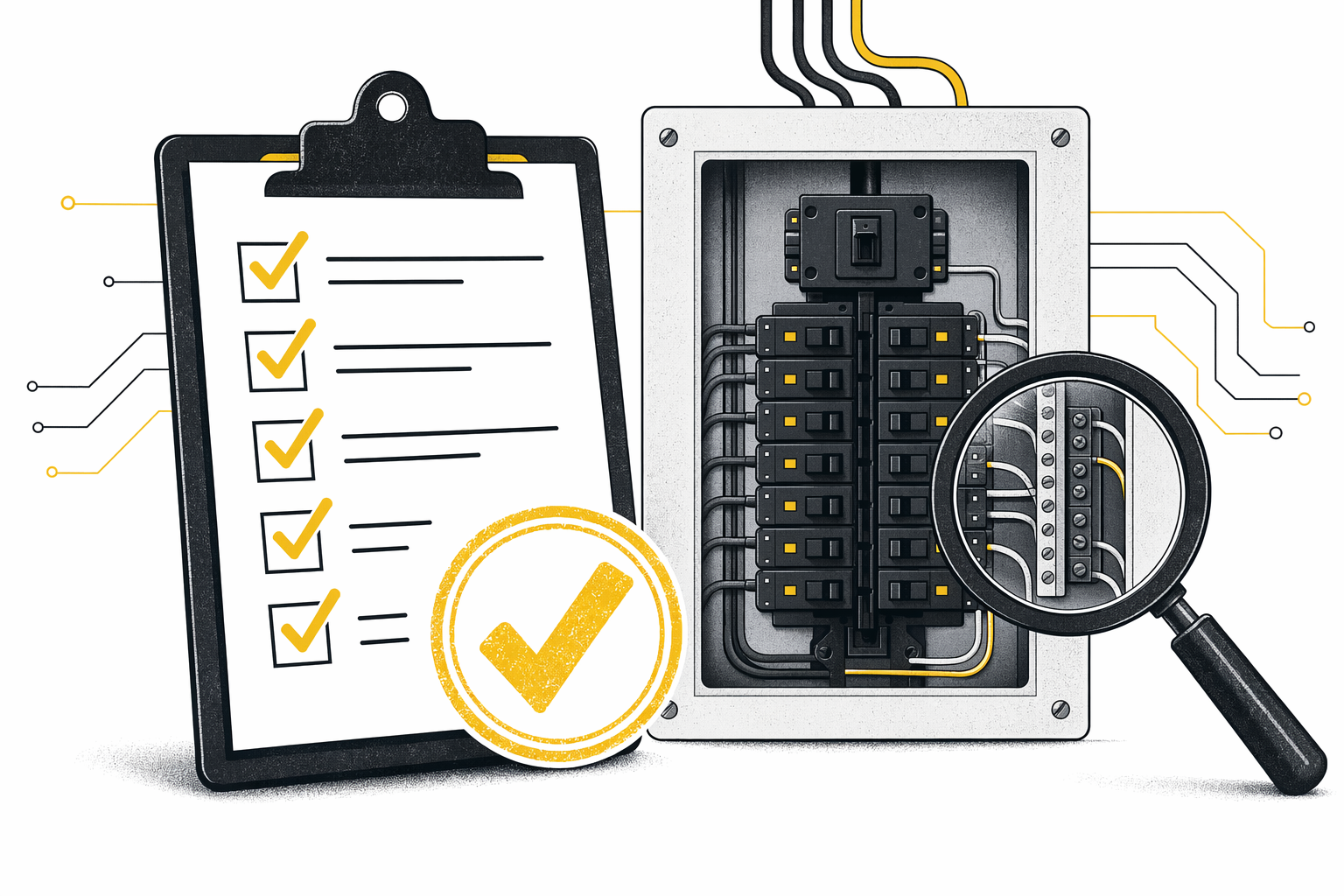
What an electrical code and safety inspection is
An electrical code and safety inspection is a professional review of your home's electrical system by a licensed electrician. The goal is to spot visible hazards, code issues, aging equipment, and signs that the system may not safely support how the home is being used today.
This is not the same as a basic home inspection. A general home inspector may note obvious concerns, but a licensed electrician is the right person to evaluate electrical problems in detail, explain likely code issues, and tell you what work may be needed next.
A safety inspection may be useful if:
- you bought an older home
- breakers trip often
- lights flicker or dim
- outlets are loose, dead, warm, or ungrounded
- you smell burning near outlets, switches, or the panel
- you are planning a remodel, panel upgrade, EV charger, or major appliance
- you need documentation before permitted work
- an insurance company, city, or buyer asked for electrical review
Important: Electrical work is dangerous and regulated. Do not open the panel, remove covers, replace breakers, or try to test wiring yourself. Hire a licensed, insured, and bonded electrician, verify the license yourself, and follow local permits and code. If you need help finding someone, you can get matched for free.
What the electrician will usually check
Every job is different, but a thorough inspection often includes a visual review and testing of the parts that are accessible and safe to evaluate.
The electrician may check:
- the main service panel and subpanels
- breaker sizing and labeling
- signs of overheating, corrosion, water entry, arcing, or double-tapped breakers
- grounding and bonding, where visible
- GFCI and AFCI protection, where required or expected
- outlets, switches, and light fixtures for wear, damage, polarity, and grounding
- exposed wiring, junction boxes, and missing covers
- service capacity compared with the home's needs
- older or problem wiring types, if present
- exterior electrical components that are accessible
They may also tell you whether the system appears outdated for modern loads. For example, homes adding central air, new kitchen equipment, or EV charging may need more panel capacity. If that comes up, read more about panel upgrades.
A good electrician will explain the difference between:
- Immediate safety hazards that should be addressed now
- Code corrections that may be needed for permitted work or sale conditions
- Recommended upgrades that are smart but not always urgent
That distinction matters. Not every older feature means the house is unsafe today. But real hazards should never be ignored.
How the process works from first call to written findings
Most homeowners want to know what will happen before they book. The process is usually simple.
- You describe the problem or goal. For example: pre-purchase review, recurring breaker trips, permit follow-up, old wiring concerns, or insurance questions.
- The electrician schedules a visit. They may ask the home's age, panel size if known, and whether there have been past electrical changes.
- They inspect accessible areas. This may include the panel exterior and interior, outlets, visible wiring, garage, basement, attic access if safe, and outdoor equipment.
- They explain what they found. Ask them to separate urgent hazards from optional improvements.
- You get the scope and price in writing before any deposit if repair work is recommended.
If the electrician says more work is needed, that inspection does not mean you must hire them for the repair. You compare quotes, you choose who to hire, and you hold the final payment.
Ask for written notes that are clear enough to use when comparing electricians. If you are not sure what paperwork matters, this guide on electrical permits explained can help you ask better questions.
Keep in mind that some code compliance questions depend on your city or county, the permit history, and whether work is new, altered, or existing. A licensed local electrician should know how your area handles those details.
Typical cost range and what changes the price
For most homeowners, the first cost is the service call or inspection visit. A typical range is $120-$400. Some electricians charge $50-$130 per hour, and some use a flat rate for inspection-style visits.
If the electrician finds problems, repair costs are separate. Common examples:
- install or move an outlet: $150-$350 typical range
- whole-house surge protector: $250-$500 typical range
- Level 2 EV charger install: $600-$2,200 typical range
- panel upgrade to 200A: $1,800-$4,500 typical range
- whole-house rewire: $8,000-$25,000+ depending on home size and access
These are estimates, not quotes or guarantees. The real price depends on the panel, the wiring, the scope, the materials, permits, and the area.
Why one inspection or repair costs more than another:
- the age of the home
- how easy the panel and wiring are to access
- whether the electrician needs troubleshooting time
- whether permits or utility coordination are required
- whether hazards are minor or point to larger upgrades
- local labor rates and travel time
If the visit may lead to bigger work, it helps to compare notes against broader costs so you can tell whether a proposal looks realistic.
Timeline and what to do before the visit
A basic inspection may take about 1 to 3 hours for many homes. Larger homes, older homes, or homes with multiple known issues can take longer. If the electrician needs to troubleshoot a specific problem, that may add time.
You can make the visit smoother by:
- clearing access to the panel, subpanels, attic hatch, garage walls, and crawlspace entrance if safe
- making a list of symptoms: tripped breakers, flickering rooms, dead outlets, buzzing, warm switches, shocks, or past repairs
- gathering any past permits, invoices, or inspection reports you have
- noting when the problem happens, such as when the microwave and toaster run together
Do not try to remove panel covers, tighten wires, swap devices, or test circuits yourself before the appointment. Electrical troubleshooting can expose live parts and hidden defects.
If the issue looks larger than a small repair, the electrician may recommend follow-up work such as rewiring or panel replacement. That does not always mean the home is dangerous right this second, but it does mean you should get clear written scope and compare options.
Stop-everything emergencies and everyday safety rules
Some electrical problems are not wait-and-see issues.
Stop using the circuit and call a licensed electrician now if you notice:
- a burning smell from an outlet, switch, fixture, or panel
- sparks, popping, crackling, or visible arcing
- repeated shocks when touching switches, appliances, or metal parts
- breakers that will not stay on
- scorch marks, melted plastic, or hot outlets
- water inside or around electrical equipment
Call 911 if there is smoke or fire.
A few plain safety rules matter here:
- Never do your own wiring.
- Never open the panel or replace breakers yourself.
- Never ignore heat, burning smells, or shocks.
- Never let unlicensed workers do hidden electrical work.
A proper inspection helps you separate old-but-working equipment from conditions that need urgent attention. For more general homeowner basics, read electrical safety basics.
Remember: an electrician's job is not just to get the lights back on. It is to identify risks you may not be able to see, especially in older homes where unsafe splices, overloaded circuits, or outdated panels may be hidden behind normal-looking walls.
What to ask before you hire
The right questions can save you money and stress. Keep it simple and direct.
Ask:
- Are you licensed, insured, and bonded for this work in my area? Then verify the license yourself.
- What does the inspection include? Panel, outlets, grounding, visible wiring, GFCI/AFCI checks, written findings?
- Will you separate urgent hazards from recommended upgrades in writing?
- If repairs are needed, will you give the price and scope in writing before any deposit?
- Will permits be required for any follow-up work, and who handles them?
- Are there limitations to what you can inspect today because of access or safety?
Watch for red flags:
- pressure to decide on the spot
- no license number
- vague pricing
- no written scope
- cash-only demands
- promises that sound too certain before they inspect anything
Hiring well matters just as much as the inspection itself. This guide on how to check an electrician license is a good next step if you want to vet someone carefully.
VoltGuide can help you compare local electricians at no cost to you. Participating electricians pay a flat fee to be included. You still choose who to hire.
If you have flickering lights, tripped breakers, old wiring concerns, or need paperwork for a sale or permit, book a licensed electrician for an electrical safety inspection. Do not touch the wiring or open the panel yourself. If you smell burning, see sparks, get shocked, or see smoke, stop using the circuit and call a licensed electrician now, or 911 if there is smoke or fire.