Why Does My Breaker Keep Tripping?
A breaker trips to stop power when something is wrong. That is a safety feature, not a nuisance, and if it keeps happening, you need to take it seriously.
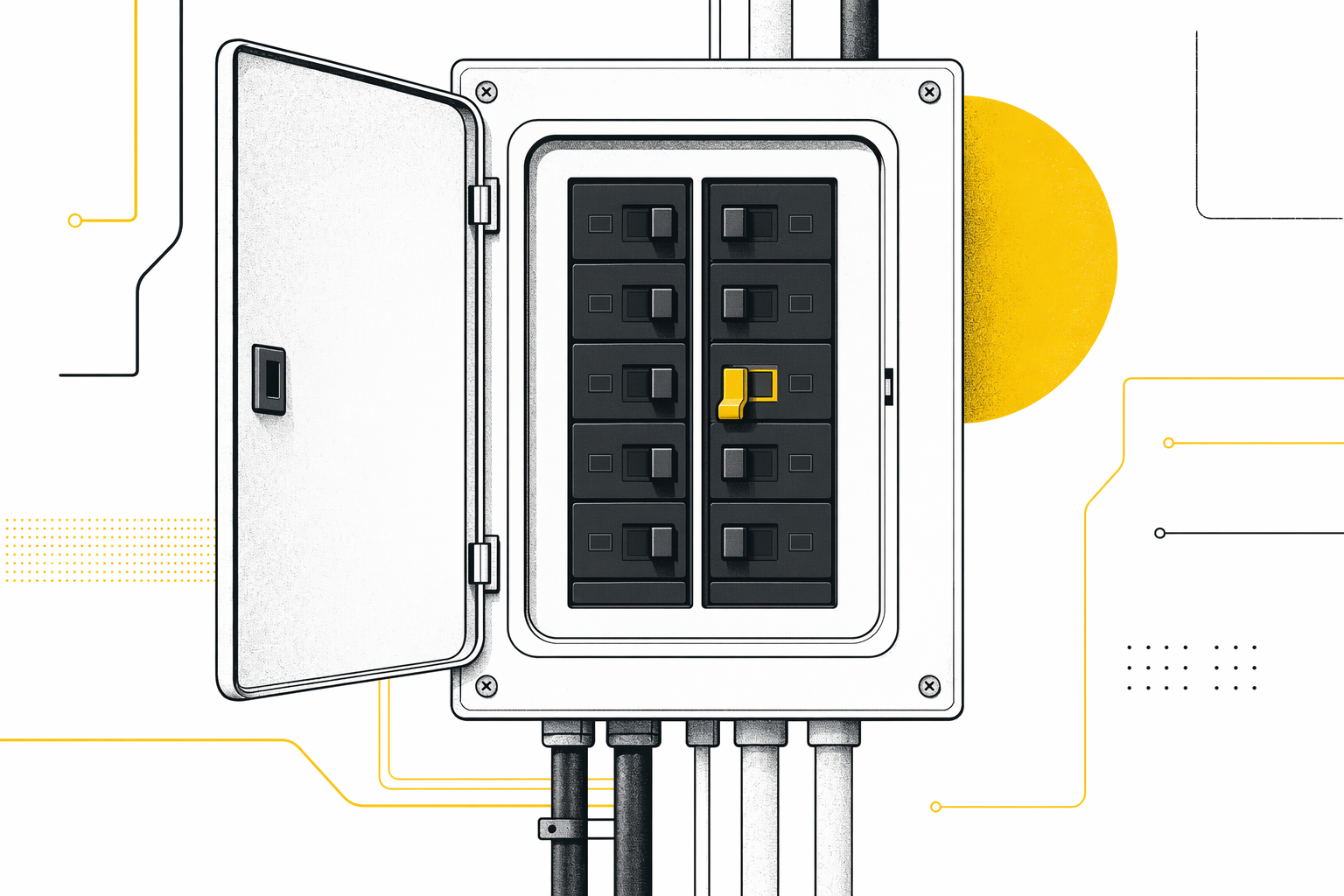
Short answer: a tripping breaker means the circuit is being pushed too hard or there may be a fault
Your breaker is designed to shut off power before wires overheat and start a fire. If the same breaker keeps tripping, the usual reasons are:
- Too much load on one circuit. Example: microwave, toaster, and coffee maker running together.
- A short circuit. Hot and neutral touch where they should not.
- A ground fault. Electricity is leaking where it should not, often around kitchens, bathrooms, garages, outdoors, or damaged cords.
- A weak or failing breaker. Less common, but it happens.
- A larger wiring problem. Loose connections, damaged insulation, old wiring, or a panel issue.
If you notice burning smells, smoke, buzzing, sparks, hot outlets, repeated shocks, or a breaker that will not stay on, stop using that circuit and call a licensed electrician now. If there is smoke or fire, call 911.
If you are dealing with urgent power loss, heat, or signs of danger, use VoltGuide to get matched with licensed, insured, bonded electricians. Matching is free to homeowners.
What usually causes it
Some causes are simple. Some are hidden behind walls or inside the panel. Because electrical work is dangerous and regulated, do not open the panel or replace breakers yourself. Hire a licensed electrician.
1. Overloaded circuit
This is the most common reason. A breaker has a limit. If one circuit is feeding too many things at once, it trips.
Common examples:
- Space heater plus vacuum on the same bedroom circuit
- Hair dryer plus curling iron in an older bathroom
- Window AC plus gaming PC plus lights in one room
- Kitchen counter appliances running together
- EV charger or large appliance added to a circuit not designed for it
Older homes often have fewer circuits, so overloads happen more easily.
2. Short circuit
A short can happen in an outlet, switch, light fixture, appliance cord, or hidden wiring. This can trip a breaker fast and may come with a pop, spark, smell, or scorch mark.
3. Ground fault
Ground faults are common where moisture is around. Bathrooms, kitchens, garages, basements, and outdoor outlets are frequent trouble spots. A bad appliance can also cause this.
4. Arc fault or damaged wiring
Loose connections or damaged insulation can create arcing. That is dangerous because it can start a fire inside a wall. Newer homes may have AFCI breakers that trip when they detect this kind of problem.
5. Failing breaker or panel issue
Breakers do wear out. Panels can also have loose connections, corrosion, heat damage, or capacity problems. If your home still has an older or undersized panel, it may be time to learn about panel upgrades.
Clues that help you explain the problem to an electrician
You do not need to diagnose it yourself. But a few details can help a licensed electrician find the issue faster.
Pay attention to when it trips:
- Only when you run several things at once: often overload
- The moment you turn one device on: often a bad appliance or short
- Randomly, even with little plugged in: possible hidden wiring problem or failing breaker
- During rain or when outdoor outlets are used: possible moisture or ground fault
- At night when space heaters or portable AC units are used: overloaded circuit is common
Look for safe, visible signs without taking anything apart:
- Outlet or switch plate feels warm
- Lights dim before the breaker trips
- One room or one group of outlets is affected every time
- A certain appliance seems to trigger it
- You smell something hot or plastic-like
- You see discoloration around an outlet or plug
If your home is older and you have frequent tripping, flickering lights, two-prong outlets, ungrounded wiring, or repeated repair issues, ask whether a larger fix may be needed. In some homes, that can mean partial or whole rewiring. The typical range for a whole-house rewire is $8,000-$25,000+, depending on house size, access, materials, permits, and local labor.
For smaller electrical jobs, electricians often charge $50-$130 per hour or a flat rate per job. A service call is commonly $120-$400. Those are typical estimates only. Real price depends on the panel, the wiring, the scope, the materials, permits, and your area.
What to do next
Here is the safest way to handle a breaker that keeps tripping:
- Stop using the problem circuit. Unplug what you can from the affected outlets.
- Do not keep forcing the breaker back on. One reset may be part of checking the issue. Repeatedly resetting a breaker can be dangerous if there is a fault.
- If there is any sign of heat, smoke, sparks, or burning smell, call a licensed electrician now. If there is smoke or fire, call 911.
- Write down what happened. Which room lost power? What was running? Did it happen after plugging in one item?
- Hire a licensed, insured, and bonded electrician. Verify the license yourself and follow local permit and code rules.
Before you hire, ask for:
- The price range and scope in writing before any deposit
- Whether permits are needed
- Whether the problem is the breaker, the circuit wiring, an outlet, or an appliance issue
- Whether the panel has enough capacity for your current loads
If you want help comparing local pros, VoltGuide can get matched with electricians who serve your area. You compare quotes, you choose who to hire, and you hold the final payment.
It also helps to read how to check an electrician license before you book anyone.
What it may cost to fix the problem
The cost depends on what is actually wrong. A tripping breaker can be a simple repair or a sign of a bigger system problem.
Typical examples:
- Service call: $120-$400
- Replace or move an outlet: $150-$350
- Whole-house surge protector: $250-$500
- Panel upgrade to 200A: $1,800-$4,500
- Level 2 EV charger install: $600-$2,200
A breaker issue tied to a new high-power device may point to a load problem, not just a bad breaker. For example, if tripping started after adding an EV charger, the electrician may need to evaluate the circuit or panel capacity. You can read more about electrical costs to understand common ranges.
Remember: these are typical ranges and estimates, not quotes or guarantees. The real price depends on the panel, the wiring, the scope, the materials, permits, and the area.
The cheapest answer is not always the safest one. If someone wants to swap a breaker without testing the cause, be careful. The real problem may be damaged wiring, a loose connection, or an overloaded circuit.
If one breaker keeps tripping, stop using that circuit and do not keep resetting it. A licensed, insured, bonded electrician should find the real cause, and you should verify the license, get the scope and price in writing, and follow local permit and code rules.