Do you need a panel upgrade?
A panel upgrade can solve real power problems, but it is not something to guess at. If your breakers trip often, your panel is old, or you are adding big new loads, have a **licensed electrician** inspect it and explain your options in writing.
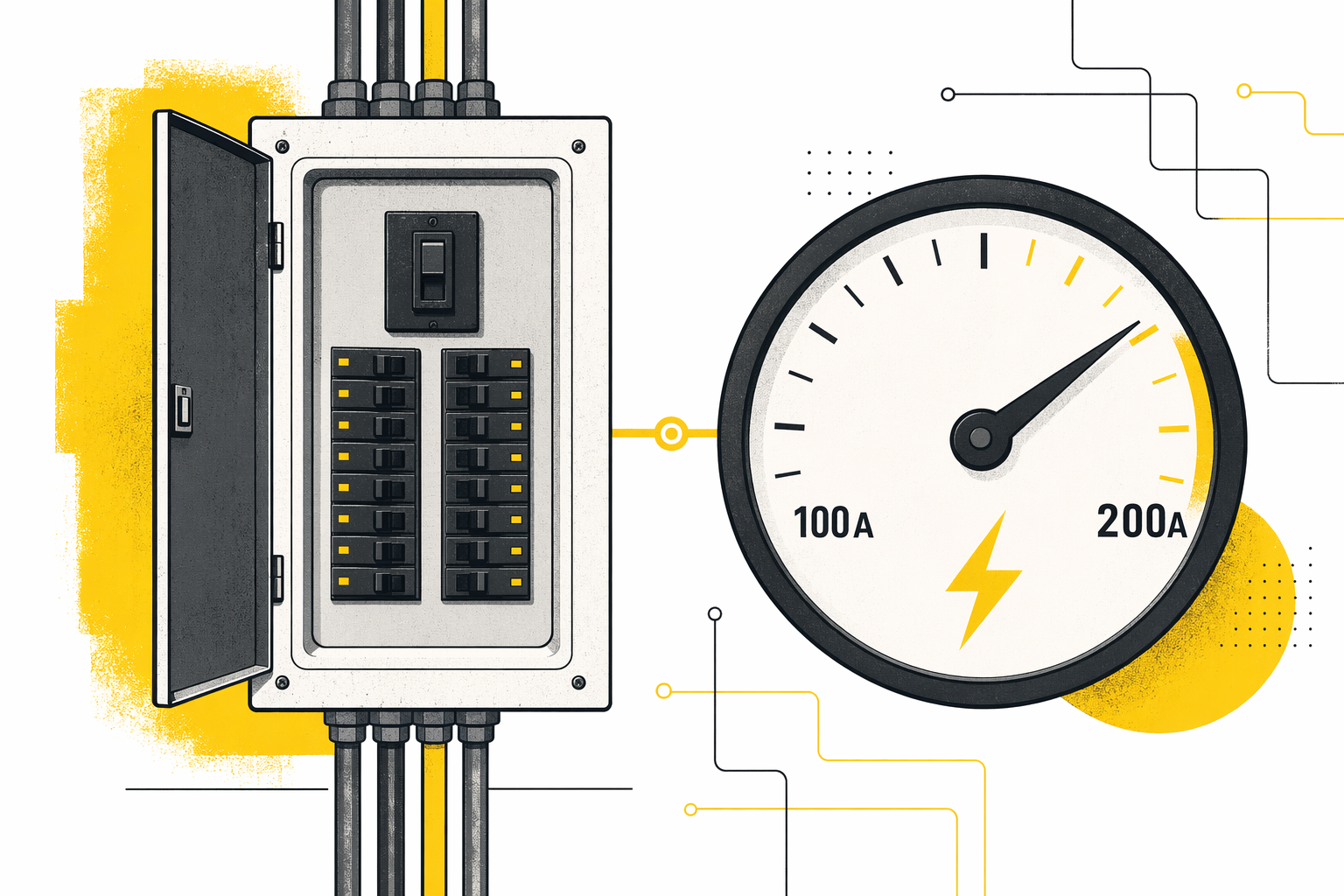
What a panel upgrade actually means
Your electrical panel is the box that sends power to the circuits in your home. A panel upgrade usually means replacing an older or undersized panel with a newer one that can safely handle more demand.
This is not a cosmetic job. It can involve the panel, breakers, grounding, service capacity, meter equipment, permits, utility coordination, and repairs to older wiring that an electrician finds along the way. That is why the final price can vary.
For many homes, a typical upgrade to 200 amps runs about $1,800-$4,500. That is only an estimate. The real price depends on the panel, the wiring, the scope, the materials, permits, and your area.
A bigger panel is not always the right answer. Sometimes the issue is one overloaded circuit, bad connections, damaged breakers, aluminum branch wiring, or a service problem outside the panel. A licensed, insured, and bonded electrician should inspect the home and tell you whether you need a repair, a subpanel, load management, or a full upgrade. If you want to compare options, you can get matched for free at VoltGuide.
Signs you may need a panel upgrade
Some warning signs are obvious. Others are easy to miss.
- Breakers trip often. A breaker that trips once in a while may be doing its job. If it happens regularly, something is wrong.
- You still have an old fuse box. Many older homes need evaluation before adding modern loads.
- Lights dim when appliances start. This can point to overloaded circuits or service issues.
- You are adding major new equipment. A Level 2 EV charger, central air, hot tub, electric range, workshop equipment, or a home addition can push an older service past its limit.
- You rely on extension cords and power strips everywhere. That often means the home does not have enough circuits or enough capacity where you need it.
- The panel is full. If there is no room for new breakers, an electrician may discuss a subpanel or a full upgrade.
- Your home has old wiring and old equipment together. That combination often needs a closer look.
Some situations need faster action. If you notice burning smells, buzzing, heat at the panel, smoke, sparks, or shocks, stop using that circuit and call a licensed electrician now. If there is smoke or fire, call 911. You can also read electrical safety basics for general warning signs.
When an upgrade makes sense
A panel upgrade is often worth considering in these situations:
1. You are increasing electrical demand.
New appliances and equipment can add up fast. A Level 2 EV charger alone often needs a dedicated 240V circuit and can affect service capacity. If that is your project, see EV charger installation.
2. Your current service is too small for the home.
Many older homes were built for a very different lifestyle. Today people may have more kitchen appliances, more electronics, HVAC upgrades, and home office equipment.
3. Your panel brand or condition raises concerns.
Some older panels have known reliability concerns, and some are simply worn out. A licensed electrician can identify the model and condition and explain whether replacement is recommended.
4. You are renovating or rewiring.
A remodel is often the right time to look at service capacity, grounding, and circuit layout together. If the home also needs major wiring work, review rewiring.
5. You need more spaces for circuits.
Sometimes a subpanel is enough. Sometimes the main panel is outdated and replacement is the cleaner long-term fix.
A good electrician should explain why an upgrade is needed, not just say you need one. Ask them to show the load calculation, the panel condition, and any code or permit reasons.
What to do before you hire anyone
Do not approve a panel upgrade after one fast sales visit. Slow down and compare.
- Get at least 2-3 written estimates. You compare quotes, you choose who to hire.
- Verify the license yourself. Use your state or local licensing board, and read how to check an electrician license.
- Make sure the electrician is licensed, insured, and bonded. Ask for the business name exactly as it appears on the license.
- Ask what is included. Panel size, breakers, grounding updates, permit fees, utility coordination, patching, labeling, surge protection, and cleanup.
- Ask who pulls the permit. Follow local permits and code. A contractor asking you to skip permits is a red flag.
- Ask whether a subpanel or load management could solve the problem instead. Bigger is not always better.
- Get the price and scope in writing before any deposit. Make sure the payment schedule is clear.
If you want help finding companies to compare, VoltGuide is a free matching service for homeowners. Participating electricians pay a flat fee to be listed and matched. You still choose who to talk to, what estimate you accept, and when final payment is released. If your project is clearly a service-capacity issue, our panel upgrades page can help you get oriented.
Common mistakes that cost homeowners money
People get burned on panel projects when they rush, assume, or let a contractor stay vague.
Mistake 1: Treating every power problem like a panel problem.
A tripping breaker does not automatically mean you need a whole new panel. It might be one bad breaker, one overloaded circuit, or a wiring issue.
Mistake 2: Buying the biggest panel without asking why.
A 200A upgrade is common, but not every home needs it. The right size depends on the home and the planned loads.
Mistake 3: Ignoring permits.
Panel work is regulated. If permits are skipped, you can have trouble with inspections, insurance questions, or resale later. Learn the basics at electrical permits explained.
Mistake 4: Comparing only the total price.
A lower estimate may leave out permit fees, grounding work, utility coordination, or replacement of damaged components.
Mistake 5: Paying too much upfront.
Get the scope and payment terms in writing before any deposit. Hold final payment until the agreed work is complete.
Mistake 6: Not asking about downtime.
Some panel upgrades mean planned power shutoff for part of the day. Ask how long the house may be without power and whether utility scheduling affects timing.
If you are mostly trying to understand pricing across common electrical jobs, cost guides can help set realistic expectations.
Next step if you think you need one
If your home shows the signs above, the next step is simple: have a licensed electrician inspect the panel and explain your options in plain language.
Ask for three things:
- A clear diagnosis of what problem they found.
- A written scope showing what will be replaced or updated.
- A written estimate with permit details and anything that could change the price.
Remember the honest price range for a common 200A panel upgrade is often $1,800-$4,500, but the real cost depends on the panel, the wiring, the scope, the materials, permits, and your area. Some homes need related work that changes the number.
If there is burning smell, heat, smoke, sparks, or repeated tripping that feels urgent, stop using the affected circuit and call a licensed electrician right away. For smoke or fire, call 911.
Want help finding someone qualified? Use get matched to compare local electricians. Matching is free for homeowners, and you stay in control of who you hire.
If your breakers trip a lot, your panel is old or full, or you are adding big new electrical loads, ask a licensed, insured, and bonded electrician to inspect the home and give you a written estimate. Do not do panel work yourself. Compare 2-3 written quotes, verify the license, make sure permits are included, and only pay based on a clear written scope.