How Much Does a Panel Upgrade Cost?
A panel upgrade is a big electrical job, and the price can vary a lot from house to house. The short answer: **a typical upgrade to a 200-amp panel often runs about $1,800-$4,500**, but the real cost depends on your existing panel, wiring, permits, materials, and local labor rates.
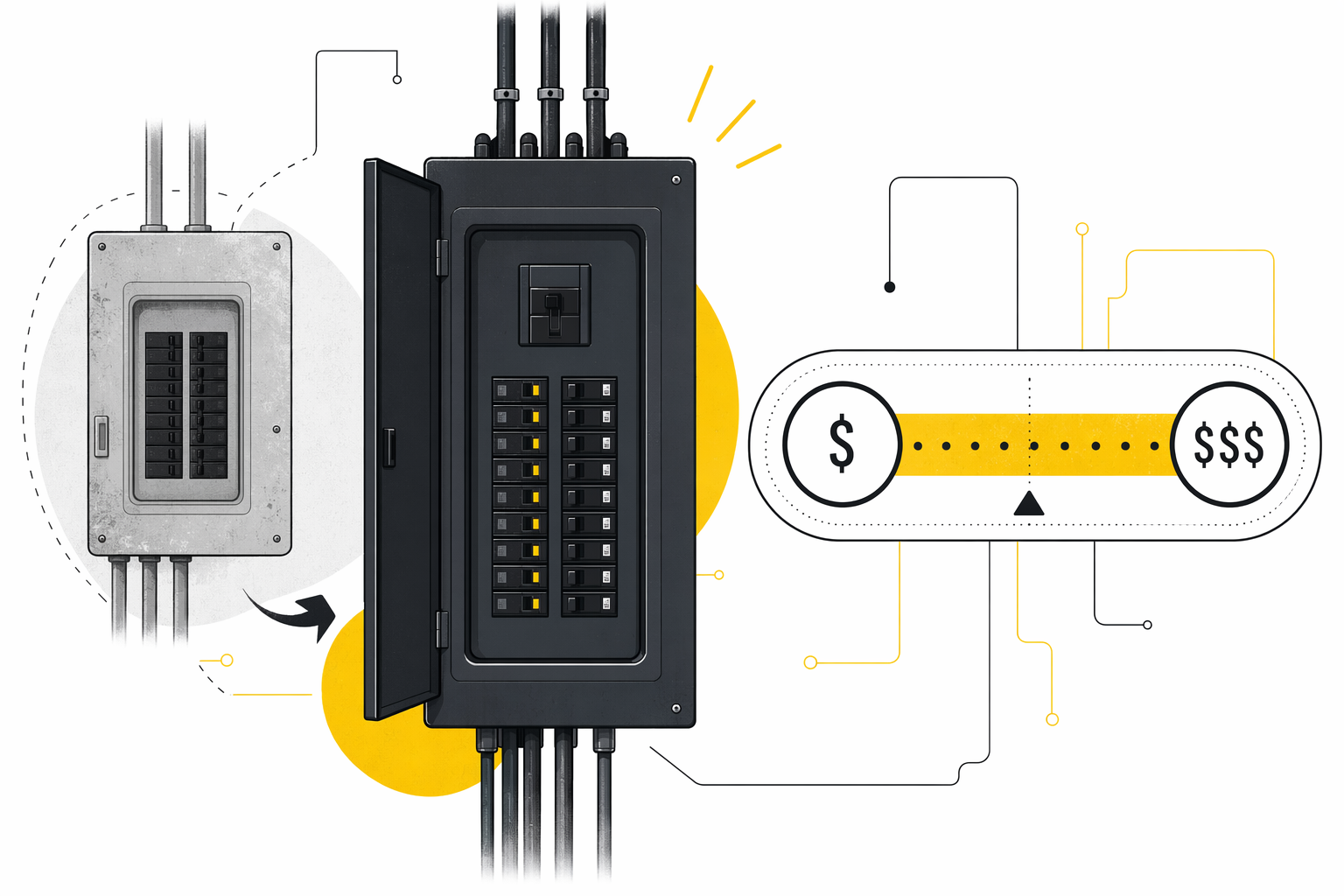
The short answer: what most homeowners pay
If your home needs more capacity, has an outdated panel, or you are adding large loads like central AC, an EV charger, or new appliances, a panel upgrade may be part of the job. In many US markets, upgrading to a 200A panel typically costs about $1,800-$4,500 as an estimate.
That range is not a quote or guarantee. Your actual price depends on:
- Your current panel size and condition
- Whether the meter base or service entrance also needs work
- The age and condition of the home's wiring
- How many circuits need to be moved, labeled, or corrected
- Permit and inspection requirements
- Whether the utility company must disconnect or coordinate service
- The materials used and the labor rates in your area
Some jobs land near the low end because the setup is straightforward. Others go well above the range because the electrician finds code issues, damaged components, limited access, or extra service equipment that must be replaced too.
If you want a broader view of typical electrical pricing, see electrical costs. If you already know you need help, you can get matched with licensed, insured, bonded electricians at no cost to you.
What can make a panel upgrade cost more or less?
A panel upgrade is not just "swap one box for another." The final price usually reflects how much related work is needed to make the system legal, safe, and ready for inspection.
Common cost factors:
1. Amperage and service size
Moving from a smaller service to 200 amps is common. In some homes, the upgrade is mainly the panel itself. In others, the service conductors, grounding, or meter equipment also need updates.
2. Panel brand, breaker type, and space needed
If your home needs more circuits, AFCI/GFCI protection, or specialty breakers, materials can cost more.
3. Condition of existing wiring
Older homes often bring surprises. Loose terminations, double-tapped breakers, damaged insulation, unlabeled circuits, or previous unpermitted work can add labor.
4. Permits, inspection, and utility coordination
Most panel upgrades require permits and inspection. In many areas, the utility also has to disconnect and reconnect service. That affects schedule and cost. Learn more in electrical permits explained.
5. Access and layout
A garage panel with clear access is usually simpler than a tight basement corner, finished wall, or location that needs extra carpentry or patching by others.
6. Related upgrades
If you are adding a hot tub, HVAC equipment, induction range, or EV charger, the electrician may recommend load calculations or other service changes. For EV charging projects, see EV charger installation.
A lower price is not always the better deal. If one estimate is far cheaper than the others, ask what is not included. Homeowners get burned when permits, utility coordination, breaker replacements, grounding work, or damaged wiring corrections show up later as add-ons.
What is usually included in the price
Every company writes estimates differently, so read the scope closely. A typical panel upgrade estimate may include some or all of the following:
- Removal of the old panel
- Installation of a new panel and main breaker
- Moving existing branch circuits into the new panel
- Labeling circuits
- Replacing some breakers as needed
- Grounding and bonding updates if required by local code
- Permit application and inspection coordination
- Utility shutdown and reconnect coordination, when applicable
- Basic testing after the work is complete
It may not include:
- Drywall repair, paint, or finish carpentry
- Bringing the entire house up to current code beyond the panel work
- Rewiring old or unsafe branch circuits
- Meter base replacement unless listed
- Surge protection unless listed
- Extra circuits for future appliances unless listed
A good question to ask is: "What exactly is included, and what would count as extra?" Get that answer in writing before any deposit.
If you are comparing companies, ask each one for the same basics:
- Total estimated price range
- Permit included or not
- Expected downtime during the shutoff
- Brand/model details if relevant
- Cleanup and disposal included or not
- Warranty terms on labor and materials
For a deeper walkthrough on comparing bids, read hiring an electrician guide.
When a panel upgrade may be needed
Not every electrical issue means you need a new panel. But there are common signs that tell homeowners it is time to have a licensed electrician evaluate the system.
You may need a panel upgrade if:
- Your home still has an older, undersized service and you keep running out of capacity
- Breakers trip often when normal appliances run at the same time
- You are adding a Level 2 EV charger, central air, a workshop, or other large electrical load
- Your panel is full and there is no safe room for new circuits
- Your electrician finds damage, corrosion, overheating, or obsolete equipment
- You are planning a major remodel and the current service is no longer adequate
Important: If you notice a burning smell, smoke, sparks, a hot panel, buzzing, or shocks, stop using that circuit and call a licensed electrician now. If there is smoke or fire, call 911.
Do not open the panel or try to replace breakers yourself. Electrical work is dangerous and regulated. Hire a licensed, insured, bonded electrician, verify the license yourself, and follow local permit and code rules.
If your home has bigger wiring problems beyond the panel, you may also need rewiring.
What to do next so you do not overpay
The safest way to shop a panel upgrade is to compare written estimates from qualified electricians and make sure you are comparing the same scope.
1. Describe the job clearly
Say what is happening now. For example: frequent trips, adding AC, adding an EV charger, or replacing an old panel.
2. Get 2-4 written estimates
Ask for the price range, scope, permit plan, and timeline in writing. Real cost depends on the panel, the wiring, the scope, the materials, permits, and the area.
3. Verify license and insurance yourself
Do not skip this step. Here is a simple guide on how to check an electrician license.
4. Ask what could change the final price
A trustworthy electrician will explain likely extras before the job starts, not after the wall is open.
5. Do not pay final payment until the job is done
You compare quotes. You choose who to hire. You hold the final payment.
VoltGuide is a free matching service for homeowners. We can help you compare local electricians, but we do not perform electrical work, design projects, issue permits, or inspect jobs. If you are ready to start, get matched or learn more about panel upgrades.
Most homeowners pay about $1,800-$4,500 for a typical 200A panel upgrade, but the real price depends on your panel, wiring, permits, materials, and local labor. Get 2-4 written estimates from licensed, insured, bonded electricians, verify the license yourself, and make sure the scope and permit plan are in writing before you pay a deposit.